
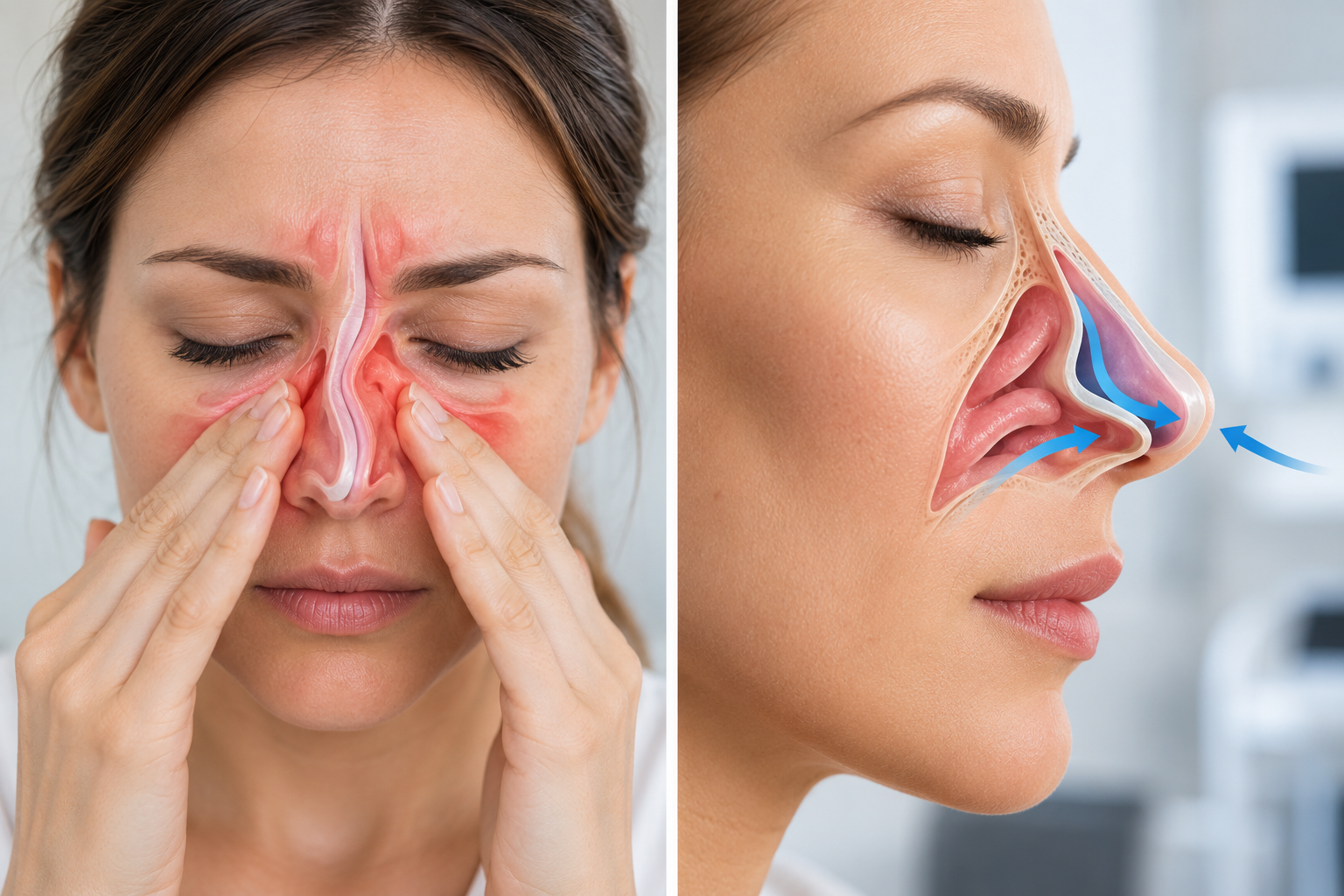
A deviated septum occurs when the thin wall of cartilage and bone separating the nasal passages is displaced to one side. Although a slight deviation is common and may cause no symptoms, a more pronounced deviation can restrict airflow and make breathing through the nose difficult.
Persistent nasal congestion, mouth breathing and disturbed sleep are among the reasons people seek medical advice. When symptoms are caused by a significant structural obstruction, septoplasty surgery may be considered to improve nasal airflow.
For international patients exploring deviated septum treatment in Istanbul, Turkey, understanding the causes, available treatments and recovery process can help with planning.
What Is a Deviated Septum?
The nasal septum is the internal structure that divides the nose into two passages. It consists of cartilage toward the front and bone farther back.
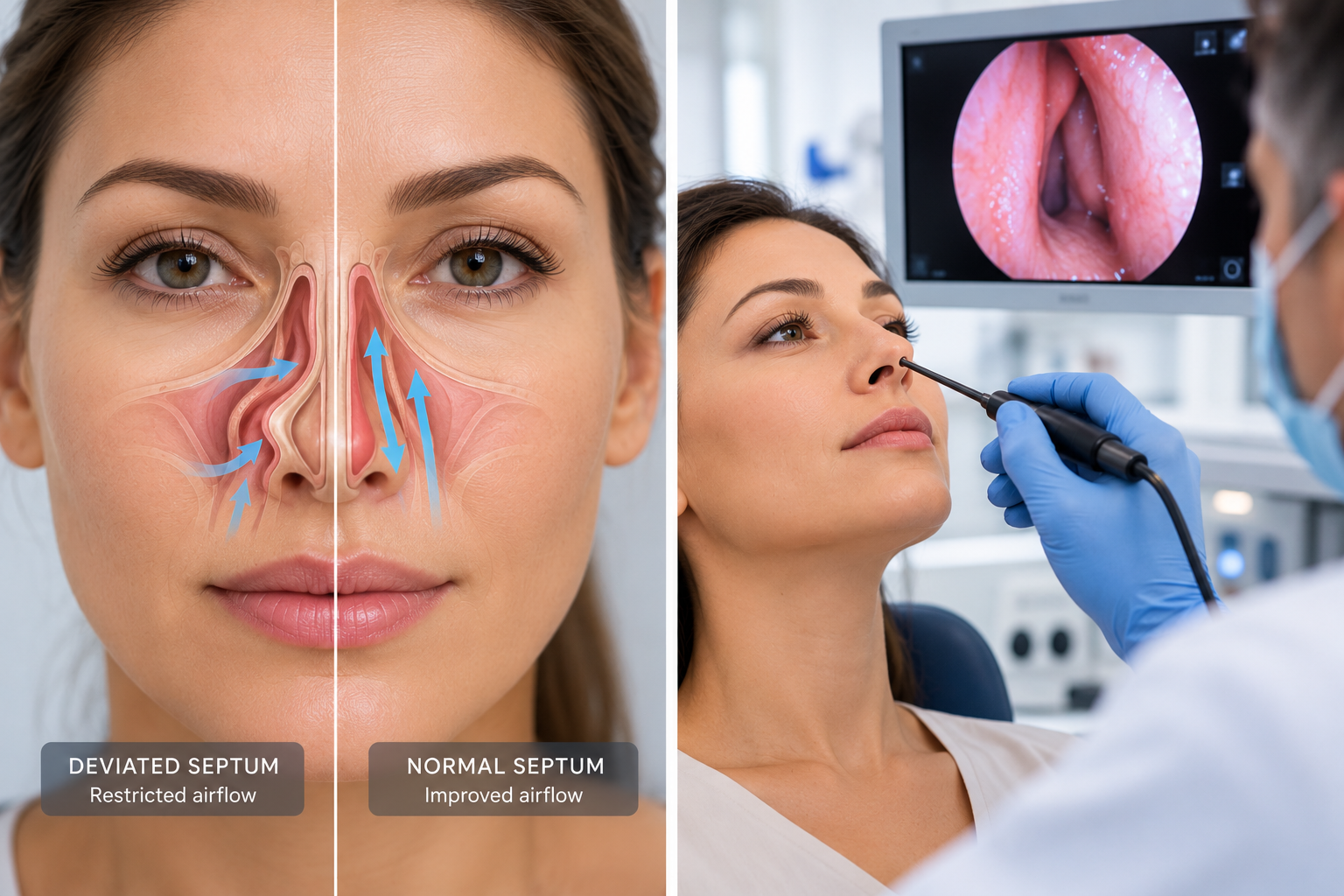
Ideally, the septum sits near the centre of the nose. However, it may be curved, displaced or uneven, making one nasal passage narrower than the other.
This condition is known medically as nasal septum deviation.
Not everyone with a deviated septum requires treatment. Many people have minor deviations without experiencing noticeable breathing difficulties. Treatment is usually considered when symptoms interfere with daily life or sleep.
What Are the Symptoms of a Deviated Septum?
The most common symptom is difficulty breathing through one or both sides of the nose. Some people notice that congestion becomes more troublesome when lying down or during a cold.
Possible symptoms include:
- Persistent nasal obstruction, often worse on one side
- Frequent mouth breathing
- Dry mouth, particularly after sleeping
- Snoring or noisy breathing during sleep
- Recurrent nosebleeds caused by dryness
- Reduced sense of smell in some cases
- A sensation of pressure or blockage inside the nose
A deviated septum may contribute to certain nasal and sinus complaints, but these symptoms can also have other causes, including allergies, enlarged turbinates and nasal polyps.
Snoring does not necessarily mean that someone has a deviated septum, and septal deviation alone does not establish a diagnosis of sleep apnoea.
What Causes a Deviated Septum?
A deviated nasal septum may be present from birth or develop later in life.
Some people have a naturally uneven septum as the nose grows. In other cases, the deviation results from an injury to the nose.
Common contributing factors include:
- Congenital differences in nasal structure
- Changes during facial growth
- Sports injuries, falls or accidents
- Previous nasal fractures
- Structural changes following earlier nasal surgery
A septal deviation can become more noticeable over time, particularly if additional conditions such as turbinate enlargement or chronic nasal inflammation reduce the available space for airflow.
How Is a Deviated Septum Diagnosed?
Diagnosis begins with a discussion of symptoms, medical history and any previous nasal injuries or operations.
A clinician examines the inside of the nose to assess the position of the septum and identify other possible causes of obstruction.
In some cases, nasal endoscopy may be used to obtain a clearer view of the nasal passages.
Additional imaging is not routinely required for every patient. It may be recommended when sinus disease, complex anatomy or another condition is suspected.
The examination helps determine whether the septal deviation is responsible for the breathing problem and whether surgery is likely to be beneficial.
Can a Deviated Septum Be Treated Without Surgery?
A structurally deviated septum cannot usually be straightened with medication. However, not all patients need an operation.
When symptoms are mild or are partly caused by nasal inflammation, non-surgical treatments may provide relief.
Depending on the underlying problem, these may include saline nasal rinses, prescribed nasal sprays or treatment for allergies.
Such measures can reduce swelling inside the nose, but they do not correct the position of the cartilage or bone.
If significant obstruction continues despite appropriate medical treatment, septoplasty may be considered.
What Is Septoplasty Surgery?
Septoplasty is a surgical procedure performed to straighten or reposition the deviated nasal septum and improve airflow through the nose.
Unlike cosmetic rhinoplasty, septoplasty primarily addresses the internal structure of the nose rather than its external appearance.
During surgery, the surgeon accesses the septum through an incision usually made inside the nostril. The displaced portions of cartilage and bone are carefully reshaped, repositioned or selectively removed while preserving the support of the nose.
The operation is commonly performed under general anaesthesia, although the anaesthetic approach depends on the individual case.
A straightforward septoplasty may take approximately 45–90 minutes. More complex procedures can take longer.
Depending on the surgical technique, internal splints or packing may be used temporarily. These are not required in every case.
Septoplasty vs. Septorhinoplasty: What Is the Difference?
Septoplasty and septorhinoplasty are related procedures, but they have different purposes.
Septoplasty focuses on correcting the internal nasal septum to address breathing difficulties.
Septorhinoplasty combines functional correction with reshaping of the external nose. It may be considered when a patient has both nasal obstruction and concerns about nasal shape, or when the external nasal framework also contributes to breathing problems.
A deviated septum does not automatically mean that cosmetic rhinoplasty is necessary.
The most appropriate procedure depends on the nasal examination, functional concerns and individual treatment goals.
Recovery After Deviated Septum Surgery
After septoplasty, temporary nasal congestion, swelling, mild discomfort and blood-stained drainage are common.
Although many patients return home on the day of surgery, some may require additional observation depending on their health and the complexity of the procedure.
Breathing may initially feel more restricted because of internal swelling, crusting or temporary splints. Improvement usually becomes more noticeable as healing progresses.
Septoplasty Recovery Timeline
| Recovery Period | What to Expect | General Advice |
|---|---|---|
| First 24–48 hours | Nasal congestion, mild bleeding and discomfort may occur. | Rest, keep your head elevated and follow postoperative instructions. |
| Days 3–7 | Swelling and congestion may continue. Splints, if used, may be removed according to the surgical plan. | Avoid forceful nose blowing and attend scheduled follow-up appointments. |
| Weeks 1–2 | Many patients gradually return to work and light daily activities. | Avoid heavy lifting and strenuous exercise until approved. |
| Weeks 3–4 | Nasal airflow may continue to improve as internal swelling decreases. | Protect the nose from injury and follow the recommended care routine. |
| Following months | Internal tissues continue to heal and breathing results become easier to assess. | Attend follow-up appointments if advised or if symptoms persist. |
Recovery varies from person to person. The internal nasal tissues continue to heal after the initial symptoms have improved.
What Should You Avoid After Septoplasty?
Following postoperative instructions helps protect the healing nasal tissues.
Patients are commonly advised to:
- Avoid forceful nose blowing during the early recovery period
- Keep the head slightly elevated when resting
- Avoid strenuous exercise and heavy lifting until cleared by the surgeon
- Protect the nose from accidental impact
- Use prescribed medication and saline products as directed
- Avoid smoking, which can interfere with healing
The timing of splint removal, exercise and return to work depends on the surgical plan.
What Are the Risks of Septoplasty?
Septoplasty is an established surgical procedure, but it carries potential risks.
These include bleeding, infection, persistent nasal obstruction, changes in nasal sensation, septal perforation and, occasionally, changes to the external appearance of the nose.
Some patients may experience incomplete improvement or require further treatment if obstruction persists or recurs.
A detailed preoperative assessment is important because not all breathing problems are caused by septal deviation.
Deviated Septum Surgery in Istanbul, Turkey
Patients travelling to Istanbul for deviated septum surgery should plan for the full treatment process, including examination, surgery and postoperative care.
An initial remote consultation may help review symptoms and medical history. However, the final decision about treatment requires an appropriate clinical examination.
International patients should allow sufficient time in Istanbul for preoperative assessment and early follow-up appointments.
If internal splints are used, their planned removal should be considered when arranging travel.
The appropriate time to fly depends on the operation, postoperative findings and individual recovery. Patients should obtain clearance from their treating surgeon before travelling home.
Follow-up arrangements after returning to their home country should also be discussed before surgery.
Deviated Septum Surgery Cost in Istanbul
The cost of deviated septum surgery in Istanbul, Turkey, varies according to the complexity of the nasal obstruction and the treatment required.
Factors that may affect the price include the surgical technique, anaesthesia, hospital or surgical facility requirements and whether additional procedures are necessary.
For example, a standalone septoplasty and a combined septorhinoplasty involve different surgical plans and costs.
International patients should also clarify whether preoperative tests, postoperative appointments, accommodation or transportation are included in their quotation.
An individual treatment plan and cost estimate can be prepared after medical assessment.
Frequently Asked Questions About Deviated Septum Surgery
Can a deviated septum cause difficulty breathing?
Yes. A significantly deviated septum can narrow one or both nasal passages and restrict airflow. However, allergies, turbinate enlargement and other nasal conditions can produce similar symptoms, so an examination is necessary.
Does every deviated septum require surgery?
No. Many people have mild septal deviations without symptoms. Surgery is generally considered when the deviation causes persistent obstruction or other significant problems that are not adequately managed with appropriate non-surgical treatment.
Will septoplasty change the shape of my nose?
Septoplasty is intended to correct the internal nasal septum and usually does not aim to change the external appearance. However, changes in nasal shape are a possible complication. Patients seeking both functional and cosmetic correction may require septorhinoplasty.
Is septoplasty a painful procedure?
Discomfort, congestion and pressure are common during early recovery. Pain levels vary, but symptoms are often manageable with medication recommended by the treating clinician.
How long does it take to breathe normally after septoplasty?
Breathing may remain restricted during the first days because of swelling, crusting or internal splints. Many patients notice gradual improvement over the following weeks, although internal healing continues for longer.
Can a deviated septum return after surgery?
Persistent or recurrent deviation is possible, particularly in complex cases or following a new nasal injury. Surgery aims to improve the obstruction, but a permanent, completely symptom-free result cannot be guaranteed.
How long should I stay in Turkey after septoplasty?
The recommended stay depends on the surgical technique, the need for splint removal and the postoperative examination. International patients should arrange their return flight only after discussing recovery and travel safety with their surgeon.
Content Responsibility and Medical Review
Medical expert
Specialist in Plastic, Reconstructive and Aesthetic Surgery
Leyla Arvas graduated from Istanbul University, Istanbul Faculty of Medicine in 1998 and is a specialist in Plastic, Reconstructive and Aesthetic Surgery.
Dr. Leyla Arvas sees patients at her private practice and performs her surgeries at Acıbadem Hospital and Memorial Hospital, both of which are accredited by the Joint Commission International (JCI).
Medical content lead for Deviated Septum: MD, Leyla Arvas, MD
Last updated: