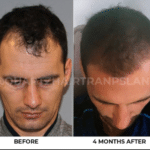

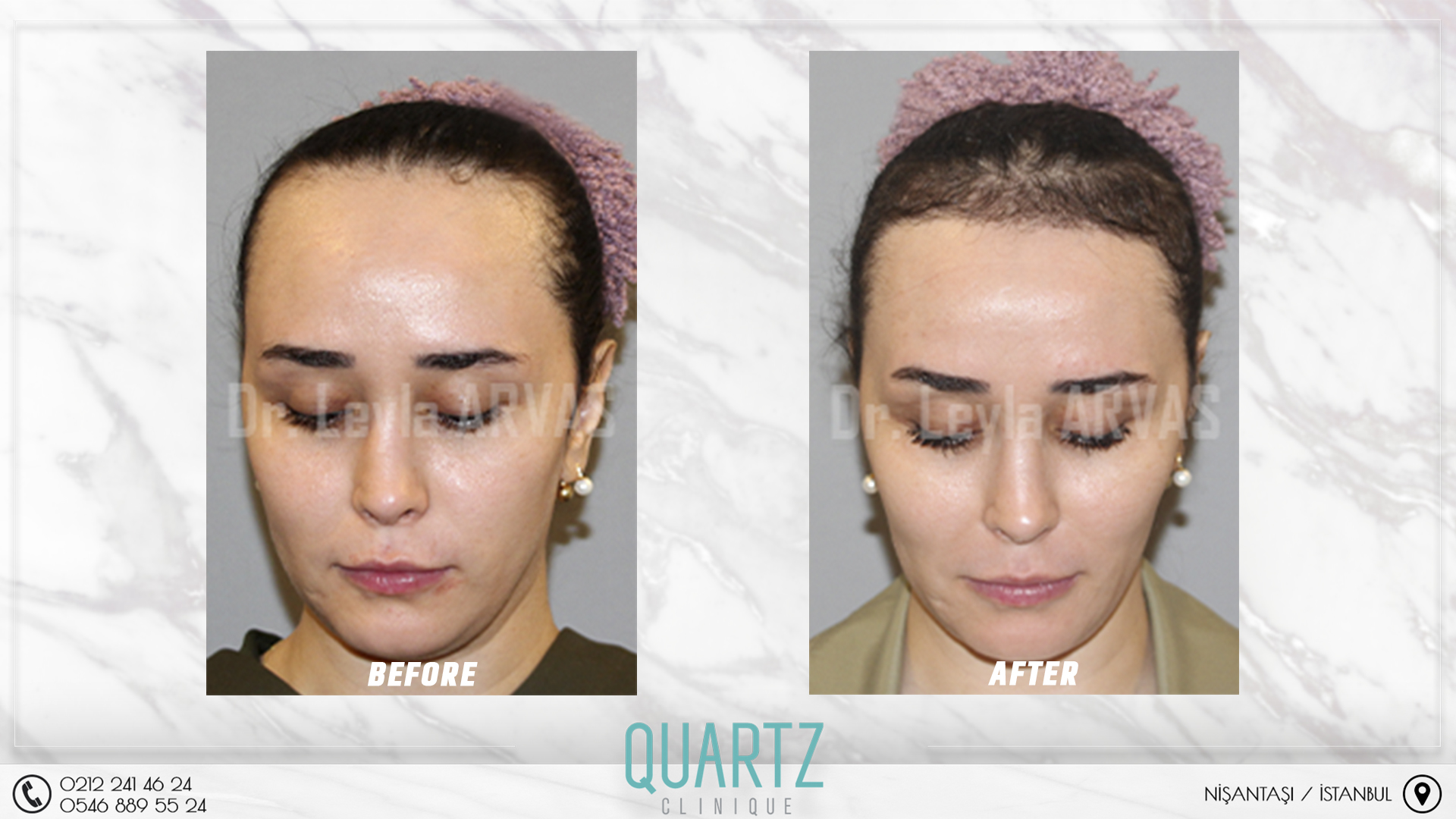
Hair loss in women does not always follow the same pattern seen in men. The hairline may remain in place while the part becomes wider, overall density decreases or certain areas of the scalp become more visible. For some women, the main concern is different: a naturally high hairline, thinning around the temples or permanent hair loss in a specific area.
This is why a female hair transplant should begin with understanding the reason for the hair loss, rather than simply deciding how many grafts to transplant.
At Quartz Clinique in Istanbul, hair transplantation for women is planned according to the pattern of hair loss, donor area, existing hair density and the result the patient would like to achieve.
Why Do Women Experience Hair Loss?
There are many possible reasons for female hair loss. Genetics can play a role, but hormonal changes, nutritional deficiencies, stress, certain medical conditions and some medications may also contribute.
Common concerns include:
- A widening centre part
- Reduced density on the top of the scalp
- Thinning around the temples
- A naturally high or uneven hairline
- Localised areas of permanent hair loss
- Hair loss following previous procedures or trauma
When hair loss is active, sudden or unexplained, identifying the underlying cause is particularly important. In some cases, medical treatment may be more appropriate than hair transplantation.
Is Hair Transplantation Suitable for Women?
Yes, but not every type of female hair loss is suitable for transplantation.
A good candidate generally needs a donor area with sufficient healthy hair follicles and a pattern of hair loss that can realistically benefit from transplantation.
For example, a woman with a stable area of thinning and a strong donor region may be a better candidate than someone experiencing active diffuse hair loss across both the recipient and donor areas.
The decision is therefore based on the individual pattern rather than gender alone.
Female Hair Transplant at a Glance
| Concern | How Hair Transplantation May Help |
|---|---|
| Widening Hair Part | Selected areas may be transplanted to improve the appearance of density |
| Temple Thinning | Hair follicles can be placed to soften and restore selected temple areas |
| High Hairline | The frontal hairline may be redesigned and lowered in suitable patients |
| Localised Hair Loss | Selected stable areas may be restored using donor hair |
How Is a Female Hair Transplant Planned?
For women, successful planning is not simply about filling an empty area. Existing hair often needs to be preserved while new grafts are carefully positioned between or around it.
The consultation therefore focuses on several details: the strength of the donor area, the direction and density of existing hair, the stability of hair loss and the design of the recipient area.
Hairline design is especially individual. A natural female hairline should suit the patient’s facial proportions rather than follow a standard shape.
FUE Hair Transplant for Women
FUE (Follicular Unit Extraction) is one of the techniques that can be used for female hair transplantation.
Individual follicular units are extracted from the donor area, usually at the back or sides of the scalp, and transplanted into the planned recipient areas.
The number of grafts required varies considerably. A patient seeking subtle temple restoration may require a very different plan from someone treating a wider area of thinning.
Do Women Have to Shave Their Hair for a Hair Transplant?
This is one of the most common concerns among female patients.
A full shave is not always necessary. Depending on the technique, donor area and number of grafts required, selected patients may be suitable for a partially shaved or shaveless approach.
Longer surrounding hair can sometimes help conceal the donor or recipient area during the early recovery period.
However, a shaveless procedure is not automatically the best choice for every patient. The technique should be selected according to the quality of transplantation and the individual treatment plan.
Hairline Lowering and Temple Restoration
Not every woman considering hair transplantation has progressive hair loss.
Some patients naturally have a high forehead or sparse temple areas and want a softer, more balanced frame around the face. In these cases, transplantation may be used to redesign selected areas of the frontal hairline.
The direction, angle and distribution of each graft are particularly important because the new hair should blend naturally with the patient’s existing hair.
What Happens After a Female Hair Transplant?
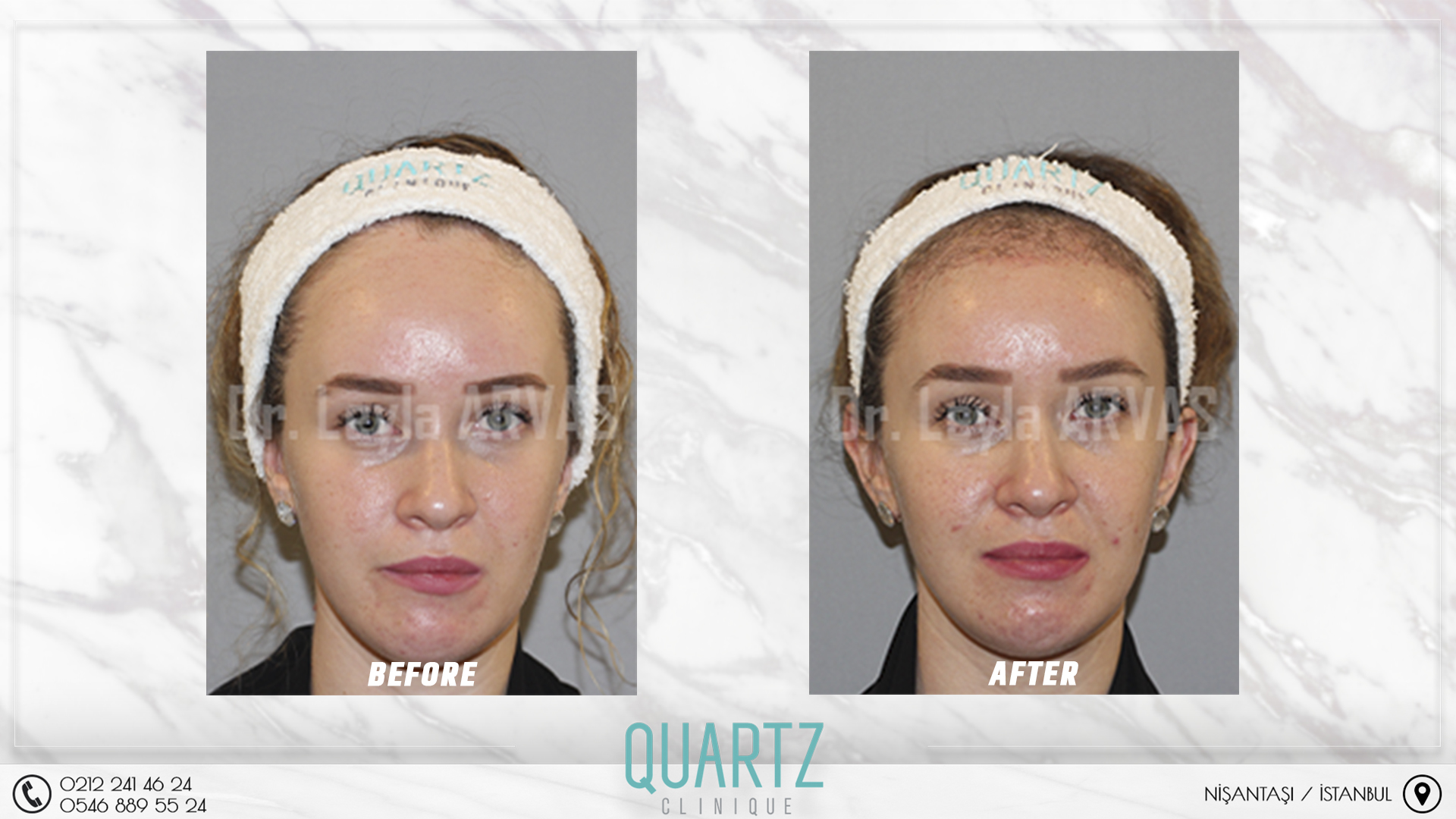
Small crusts and temporary redness can develop around the transplanted follicles during the early healing period. The donor area also requires time to recover.
Transplanted hairs commonly shed during the first stage after the procedure. This does not necessarily mean the follicles have been lost. New growth develops gradually as the follicles enter their normal growth cycle.
Hair transplantation is therefore a process rather than an immediate transformation. Changes in density become more apparent over time, and final maturation takes considerably longer than the initial healing period.
Will the Result Look Natural?
Natural-looking results depend on much more than the number of grafts.
Hairline design, graft angle, direction, distribution and the relationship between transplanted and existing hair all influence the final appearance. This is particularly important around the frontal hairline and temples, where an overly straight or dense design can look artificial.
The aim is to create a result that blends with the patient’s own hair pattern and facial proportions.
Female Hair Transplant in Istanbul, Turkey
Women travelling to Istanbul for hair transplantation can usually begin the assessment before their trip by sharing clear photographs of the hairline, thinning areas and donor region.
The clinic can then make an initial evaluation and explain whether transplantation appears appropriate, although the final plan is confirmed after an in-person examination.
Patients travelling internationally should allow enough time for the procedure and initial post-treatment checks before returning home.
Female Hair Transplant Cost in Istanbul
The cost of a female hair transplant in Istanbul is determined by the individual treatment plan rather than gender alone.
The price can vary according to the size of the treatment area, number of grafts, donor area, technique and whether a shaveless approach is suitable.
Clear photographs can be useful for an initial assessment, but the final treatment plan is determined after evaluating the hair and scalp.
Frequently Asked Questions
Can women have a hair transplant?
Yes. Women with a suitable donor area and an appropriate, stable pattern of hair loss may be candidates for hair transplantation.
Can female pattern hair loss be treated with a hair transplant?
Selected patients may benefit, but female pattern hair loss can be diffuse. The donor area and progression of hair loss therefore need to be carefully evaluated before transplantation.
Can I have a hair transplant without shaving my head?
In selected cases, yes. Partial-shave or shaveless techniques may be possible depending on the number of grafts, donor area and treatment plan.
Can a hair transplant lower a woman’s hairline?
Hair transplantation can be used to redesign or lower a naturally high hairline in suitable patients. The design should be adapted to the patient’s facial proportions and existing hair.
Does transplanted hair grow immediately?
No. Early shedding of transplanted hairs is common. New hair growth develops gradually as the transplanted follicles progress through their natural growth cycle.
Content Responsibility and Medical Review
Medical expert
Specialist in Plastic, Reconstructive and Aesthetic Surgery
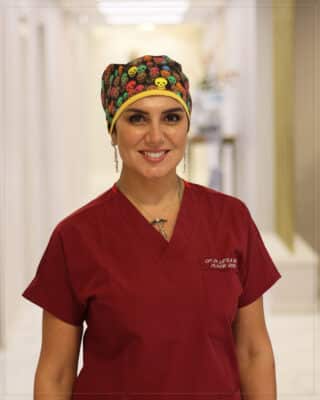
Leyla Arvas graduated from Istanbul University, Istanbul Faculty of Medicine in 1998 and is a specialist in Plastic, Reconstructive and Aesthetic Surgery.
Dr. Leyla Arvas sees patients at her private practice and performs her surgeries at Acıbadem Hospital and Memorial Hospital, both of which are accredited by the Joint Commission International (JCI).
Medical content lead for Female Hair Transplant: MD, Leyla Arvas, MD
Last updated: