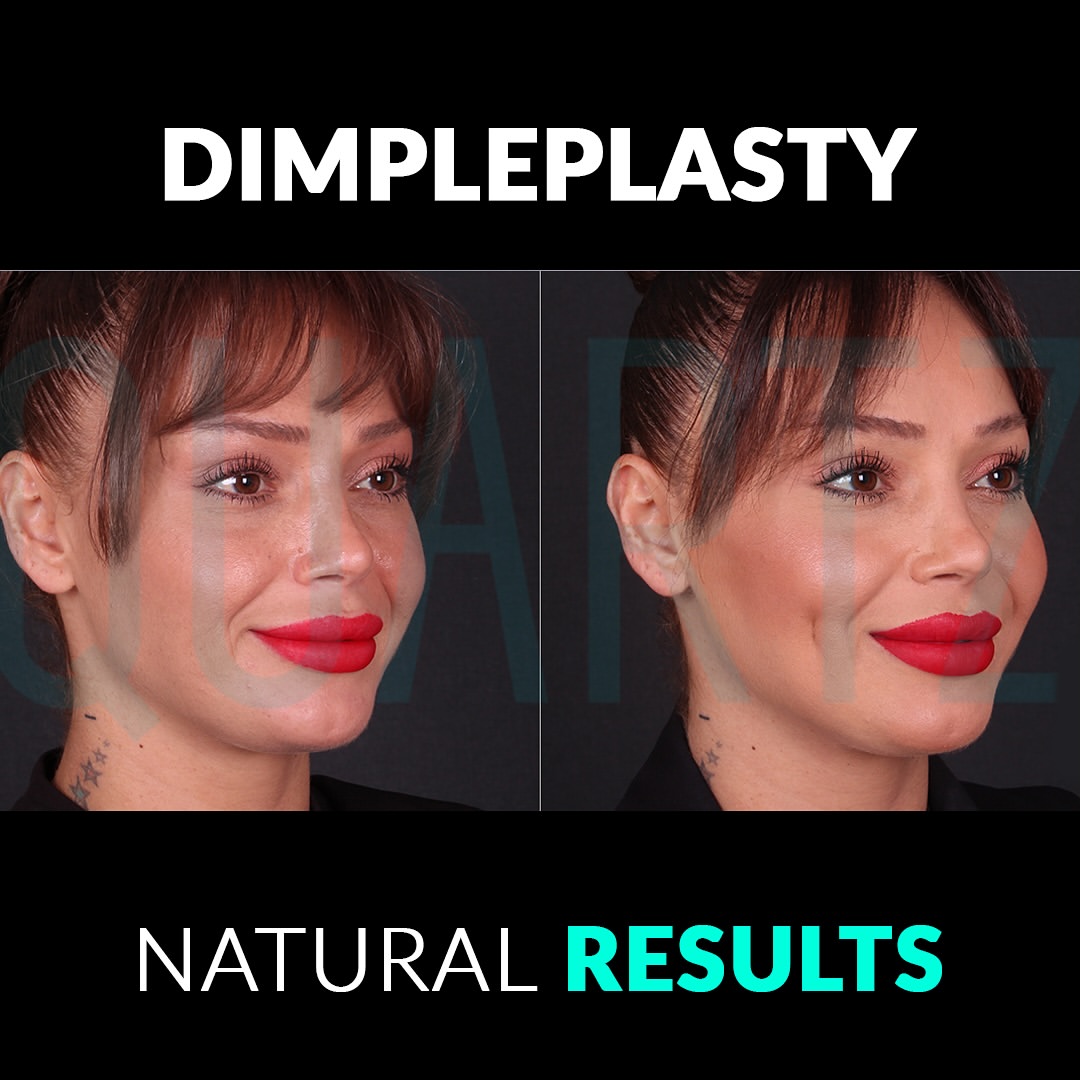
Dimples can add character to a smile by creating a small indentation in the cheek. While some people have natural dimples, others choose to create them with a minor surgical procedure known as dimpleplasty.
Dimpleplasty, also called dimple creation surgery, is performed from inside the mouth to create a connection between the cheek tissue and the overlying skin. The position and depth of the dimple are planned according to the patient’s facial proportions, smile and desired appearance.
At Quartz Clinique in Istanbul, dimple surgery is individually planned with the aim of creating a dimple that complements the patient’s facial features rather than looking overly deep or artificial.
What Is Dimpleplasty?
Dimpleplasty is a cosmetic procedure used to create a cheek dimple in people who do not naturally have one or who would like an existing dimple to appear more defined.
Natural cheek dimples are related to variations in facial anatomy. Dimple surgery aims to create a similar indentation through a small internal attachment between the cheek tissue and skin.
The procedure can be performed on one cheek or both cheeks. Because the surgical approach is made from inside the mouth, an external skin incision on the cheek is generally not required.
Dimple Surgery at a Glance
| Procedure | Dimpleplasty |
|---|---|
| Treatment Area | One or both cheeks |
| Anaesthesia | Usually local anaesthesia |
| Incision | Inside the mouth |
| Hospital Stay | Usually not required |
| Main Goal | Creating a natural-looking cheek dimple |
| Recovery | Temporary swelling and tenderness may occur |
How Is Dimpleplasty Performed?
Before the procedure, the position of the new dimple is planned according to the patient’s smile, cheek structure and facial proportions.
Dimple surgery is generally performed through a small incision inside the mouth. An internal attachment is created between the cheek tissue and the underside of the skin at the selected location, allowing an indentation to form.
Since the procedure is performed from inside the mouth, there is generally no external incision on the cheek.
Where Should a Dimple Be Placed?
Dimple position plays an important role in how natural the final result appears.
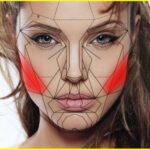
There is no single ideal position for every face. During planning, factors such as facial proportions, cheek structure, smile pattern, natural asymmetry and the preferred depth of the dimple are considered.
Some patients prefer a subtle dimple that becomes noticeable mainly when smiling, while others prefer a more defined appearance.
Patients can also choose between one or two cheek dimples. When two dimples are planned, their positions should complement the face rather than simply being placed at identical points on each side.
Will Dimpleplasty Look Natural?
The appearance of a surgically created dimple changes during healing.
In the early period, the dimple may look deeper than expected or remain visible even when the face is relaxed. Swelling can also temporarily affect its appearance.
As healing progresses, the tissues settle and the appearance of the dimple can become softer.
The final result depends on facial anatomy, surgical technique, tissue response and the position and depth selected during planning.
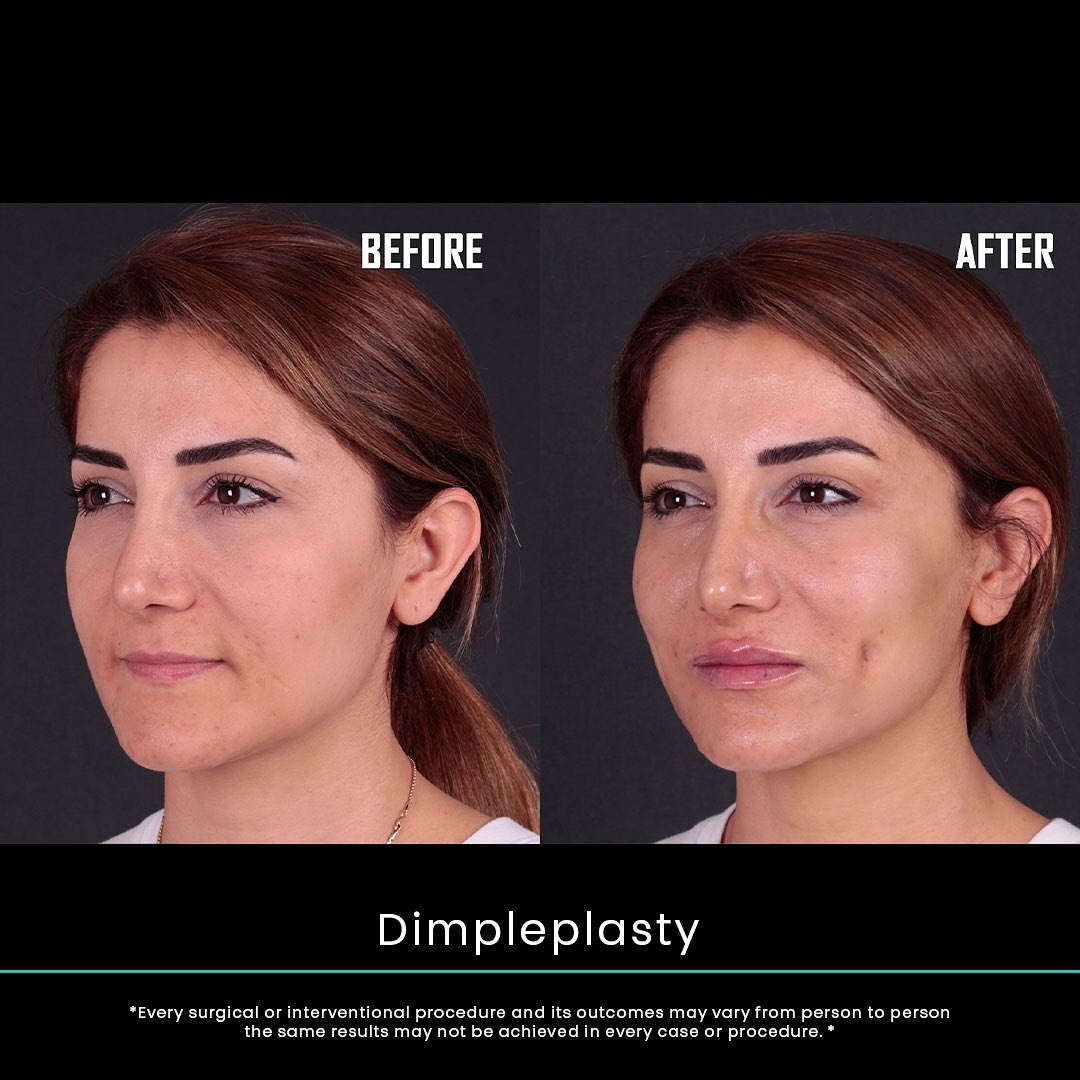
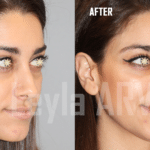
Dimpleplasty Before and After
Before-and-after photographs can help patients understand how dimple creation can change the appearance of the smile and cheeks.
Results vary between individuals, so photographs should be considered examples of previous patient outcomes rather than a guarantee of a specific result.
What Is Recovery Like After Dimple Surgery?
Temporary swelling, tenderness and discomfort inside the cheek can occur after dimpleplasty.
Because the procedure involves the inside of the mouth, patients receive instructions about oral hygiene and eating during the early recovery period.
The dimple may initially appear more pronounced while swelling is present. Its appearance gradually changes as the tissues heal.
Patients should follow their surgeon’s recommendations regarding oral care, diet and activity after the procedure.
Is Dimpleplasty Permanent?
Dimpleplasty is intended to create a long-lasting change, but the final depth and visibility of the dimple can vary.
During healing, the appearance may change as swelling resolves and the internal tissues settle. Individual anatomy and healing response also influence the long-term result.
For this reason, the expected appearance should be discussed during consultation rather than assuming that every surgically created dimple will behave in exactly the same way.
Are There Risks with Dimple Surgery?
Although dimpleplasty is a relatively small cosmetic procedure, it is still a surgical intervention.
Potential risks can include:
- Swelling and bruising
- Bleeding
- Infection
- Asymmetry
- A dimple that appears deeper or shallower than expected
- Changes in the appearance of the dimple during healing
- Need for revision in selected cases
Individual risks and suitability are discussed with the surgeon before treatment.
Dimpleplasty in Istanbul, Turkey
For international patients considering dimpleplasty in Istanbul, treatment planning begins with an assessment of facial structure, smile and the preferred position of the dimple.
At Quartz Clinique, patients can discuss whether they would like one or two dimples and whether they prefer a subtle or more defined appearance.
Dimpleplasty is generally performed without a hospital stay, depending on the individual case. International patients should share their arrival and departure dates before treatment so that the procedure and initial follow-up can be planned around their stay in Istanbul.
Dimpleplasty Cost in Istanbul
The cost of dimpleplasty in Istanbul varies according to the individual treatment plan.
Factors that may affect the price include:
- Whether one or both cheeks are treated
- Individual facial anatomy
- Complexity of the procedure
- Whether any additional treatment is planned
For an accurate price, the patient’s facial anatomy and treatment expectations should first be assessed.
International patients can contact Quartz Clinique before travelling to Istanbul for information about current pricing, treatment planning and appointment availability.
Frequently Asked Questions About Dimpleplasty
Is dimpleplasty painful?
Dimpleplasty is usually performed under local anaesthesia. Some tenderness or discomfort may occur during the early healing period.
Can I choose where my dimples will be?
Your preference is an important part of planning. However, facial anatomy, cheek structure and the way your face moves when smiling should also be considered when selecting the position.
Can I have only one dimple?
Yes. Dimple creation surgery can be performed on one cheek or both cheeks.
Will the dimple show when I am not smiling?
A newly created dimple may initially be visible even when the face is relaxed. Its appearance can become softer as swelling resolves and the tissues heal.
Is there a visible scar after dimpleplasty?
The surgical approach is generally made from inside the mouth, so there is usually no external incision on the cheek.
How long should I stay in Istanbul after dimple surgery?
Dimpleplasty generally does not require a long stay, but the recommended travel plan depends on the individual procedure and follow-up. International patients should discuss their travel dates before treatment.
References
- Peer-reviewed literature on facial dimple anatomy and surgical dimple creation techniques.
- Clinical literature on intraoral dimpleplasty techniques and outcomes.
- Relevant plastic surgery literature regarding facial aesthetic surgery and patient safety.
Content Responsibility and Medical Review
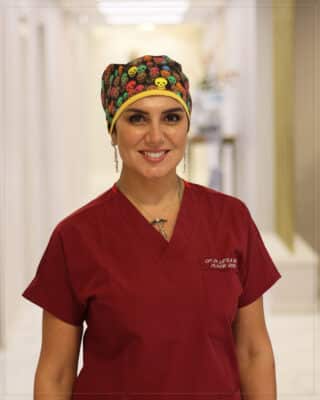
Medical expert
Specialist in Plastic, Reconstructive and Aesthetic Surgery
Leyla Arvas graduated from Istanbul University, Istanbul Faculty of Medicine in 1998 and is a specialist in Plastic, Reconstructive and Aesthetic Surgery.
Dr. Leyla Arvas sees patients at her private practice and performs her surgeries at Acıbadem Hospital and Memorial Hospital, both of which are accredited by the Joint Commission International (JCI).
Medical content lead for Dimpleplasty: MD, Leyla Arvas, MD
Last updated: