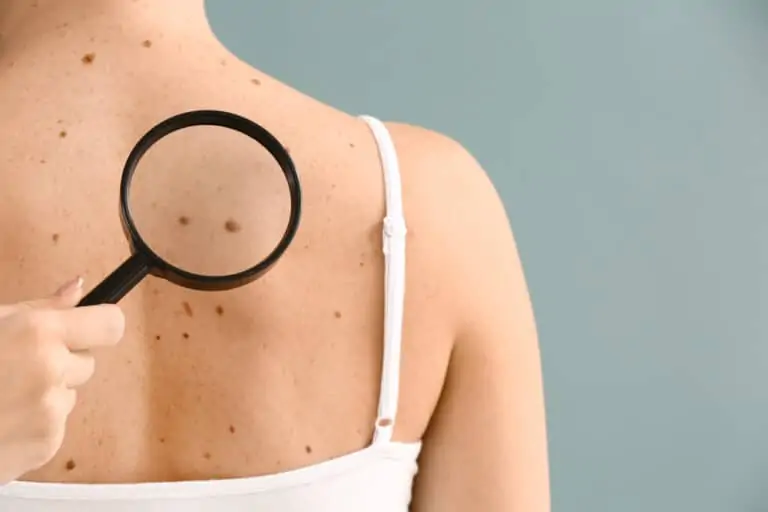
Moles are extremely common and, in most cases, completely harmless. Some people consider having a mole removed because it catches on clothing or becomes irritated, while others simply dislike its appearance — particularly when it is on the face or another visible area. Occasionally, a mole may also need medical assessment because its colour, shape, size or behaviour has changed.
Mole removal at Quartz Clinique in Istanbul is planned according to the type and location of the mole, how deep it extends into the skin and whether there are any features that require further investigation. The priority is always to assess the lesion first and then choose an appropriate removal technique.
What Is Mole Removal?
Mole removal is a procedure used to remove a mole, medically known as a nevus, from the skin for cosmetic, practical or medical reasons.
There is no single technique that is right for every mole.
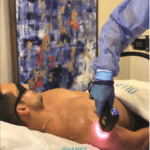
A small, raised mole that has remained unchanged for years may require a very different approach from a flat, irregularly pigmented lesion. Depending on the clinical assessment, treatment may involve shave removal, surgical excision or, in carefully selected cases, laser treatment.
If a mole looks suspicious, obtaining tissue for histopathological examination takes priority over achieving a stitch-free cosmetic removal.
This distinction is important, particularly for patients travelling to Istanbul primarily because they would like a facial mole removed for aesthetic reasons.
Mole Removal at a Glance
| Treatment | Mole Removal |
|---|---|
| Medical Name for a Mole | Nevus (plural: nevi) |
| Reasons for Removal | Cosmetic concerns, recurrent irritation or medical assessment |
| Common Methods | Shave removal, surgical excision and selected laser procedures |
| Anaesthesia | Usually local anaesthesia |
| Pathology | May be recommended depending on the lesion and removal method |
| Stitches | Usually required after full surgical excision; not always required after shave removal |
| Recovery | Depends on the size, location and removal technique |
| Scarring | Some degree of skin change or scarring is possible with any removal method |
What Is a Mole?
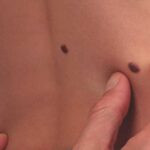
A mole is a localised growth of pigment-producing cells called melanocytes.
Moles can be present from birth or develop later in childhood and adulthood. They vary considerably in appearance. Some are completely flat, while others are raised above the skin. Their colour can range from skin-coloured and pink to different shades of brown or almost black.
Genetics, skin type and sun exposure can all influence the number and appearance of moles a person develops.
Having multiple moles does not necessarily mean there is a problem. What matters more is whether an individual mole begins to behave differently from the others or changes over time.
When Should a Mole Be Checked?
Most moles remain benign throughout life. Nevertheless, a mole that changes deserves medical attention.
It is particularly sensible to arrange an assessment if you notice:
- A noticeable change in size
- Increasing asymmetry
- An irregular or changing border
- Several colours developing within the same lesion
- Recurrent bleeding or crusting
- A sore that does not heal
- New or persistent itching
- Rapid or unexplained change
None of these signs automatically means that a mole is cancerous. They do, however, mean that simply booking a cosmetic laser treatment without first having the lesion assessed would not be the appropriate approach.
A dermatologist or appropriately qualified physician may recommend clinical examination, dermoscopy or removal for histopathological analysis.
Why Do People Have Moles Removed?
There are several reasons someone may decide to have a mole removed.
For many patients, the reason is cosmetic. A raised mole on the nose, cheek, chin or another prominent facial area can draw attention and may become something the person would simply prefer not to have.
Other moles repeatedly catch on:
- Clothing
- Jewellery
- Bra straps
- Razors
- Hairbrushes
Repeated irritation can make an otherwise harmless mole uncomfortable.
There is also a third group: lesions removed because their clinical appearance requires further investigation.
The reason for removal influences which technique is appropriate.
Facial Mole Removal
Facial moles are one of the most common reasons patients seek cosmetic mole removal.
The approach to a facial mole requires particular attention because the objective is not simply to remove the lesion. The eventual scar and its relationship with natural facial lines also matter.
A small raised mole on the cheek, for example, may sometimes be suitable for a conservative shave technique. A deeper lesion may require complete surgical excision and closure with fine sutures.
The method that appears less invasive is not automatically the method that will produce the best long-term cosmetic result.
Depth, location, skin type and the nature of the mole all need to be considered.
How Are Moles Removed?
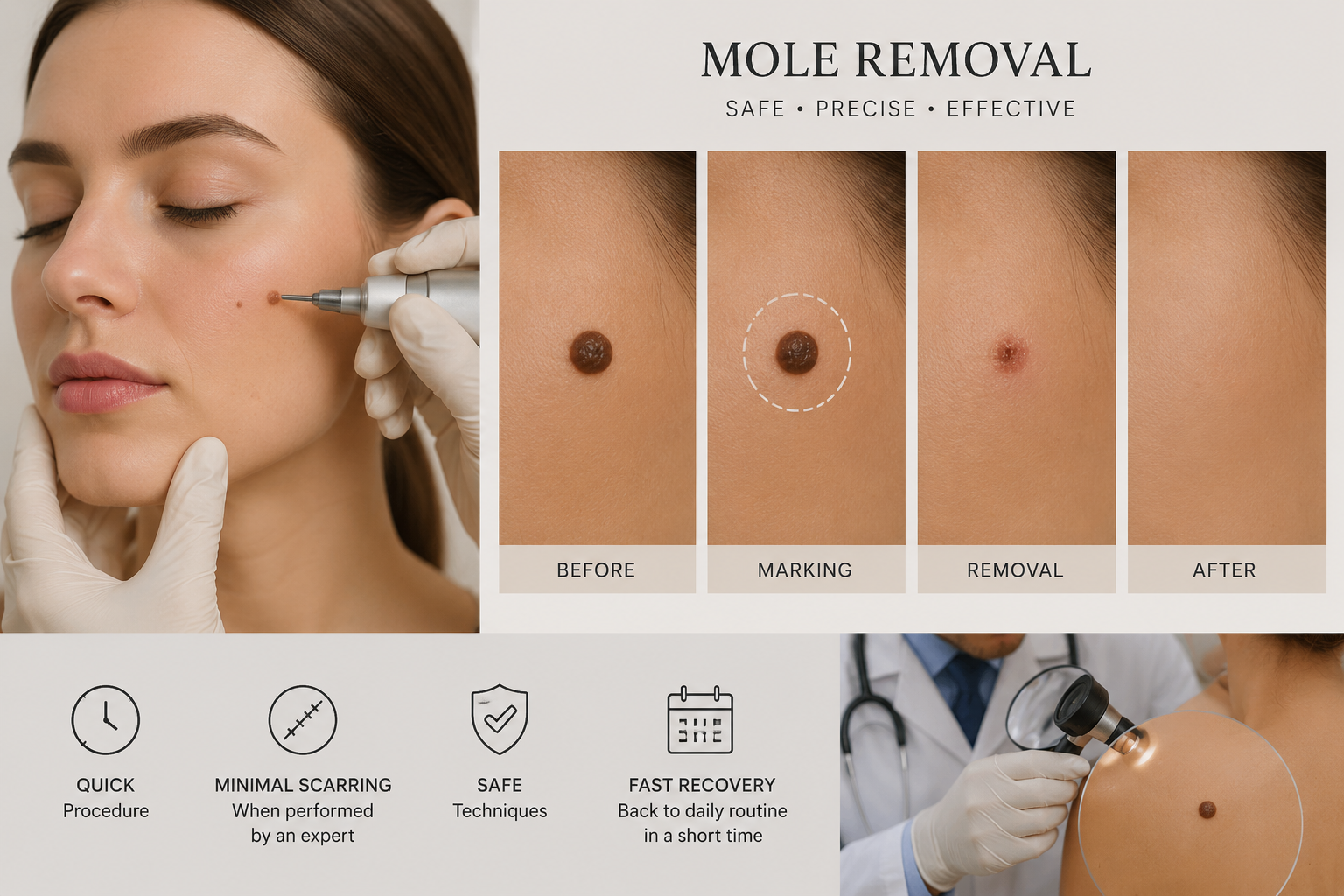
The procedure starts with an examination of the mole.
Its size, depth, colour, border and overall clinical appearance are assessed. Dermoscopy may be used when appropriate.
Once the lesion has been evaluated, the doctor can decide whether it is suitable for cosmetic removal and which technique makes the most sense.
Most minor mole removal procedures can be performed under local anaesthesia. This numbs the treatment area while the patient remains awake.
The actual removal of a single small mole is often relatively quick, although appointments involving several lesions naturally take longer.
Shave Mole Removal
Shave removal — sometimes called shave excision — can be useful for selected raised moles that appear clinically benign.
After local anaesthesia, the projecting portion of the mole is carefully removed close to the level of the surrounding skin. Depending on the technique, cautery may also be used to control bleeding or refine the treated area.
Because the skin is not necessarily closed with stitches, a small superficial wound is left to heal naturally.
A crust usually forms during the healing process and should be allowed to separate on its own.
Shave removal can offer a good cosmetic outcome in appropriately selected lesions, particularly certain raised facial moles. However, it does not remove every mole at its full depth, which means recurrence is possible.
That possibility should be discussed before treatment.
Surgical Mole Removal
Surgical excision removes the mole through the full thickness required for the individual lesion.
After local anaesthesia, the mole is removed together with an appropriate margin of surrounding tissue when medically indicated. The skin is then closed with sutures.
Surgical excision may be preferred for:
- Deeper moles
- Larger lesions
- Flat pigmented lesions requiring complete removal
- Moles with atypical features
- Lesions requiring histopathological examination
One advantage is that an intact tissue sample can be sent to a pathology laboratory.
The trade-off is that surgical excision produces a linear scar.
Careful surgical planning and closure can help make the scar as discreet as possible, but it would be misleading to promise completely scar-free removal.
Can Moles Be Removed with Laser?
Laser treatment is frequently searched for by patients looking for a quick, stitch-free way to remove a mole.
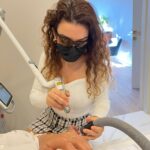
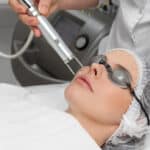
For carefully selected benign lesions, laser-based treatment may sometimes be considered.
However, laser is not suitable for every mole.
This becomes particularly important with pigmented or clinically suspicious lesions. Destroying a suspicious lesion with laser can mean that suitable tissue is no longer available for histopathological examination.
For that reason, the first question should not be:
“Can this mole be removed with laser?”
It should be:
“What is this lesion, and what is the safest appropriate way to remove it?”
Once that has been established, the treatment method can be selected.
Laser vs Shave vs Surgical Mole Removal
| Method | Often Considered For | Stitches | Important Consideration |
|---|---|---|---|
| Shave Removal | Selected raised, clinically benign moles | Usually no | A mole can recur if deeper cells remain |
| Surgical Excision | Deep, larger or suspicious lesions | Usually yes | Provides tissue for pathology but leaves a linear scar |
| Laser | Selected superficial benign lesions after assessment | No | Generally not preferred when histopathology may be required |
Does Mole Removal Leave a Scar?
This is understandably one of the first questions people ask, particularly when considering facial mole removal.
Any procedure that removes tissue from the skin has the potential to leave some visible change.
The eventual appearance depends on several factors:
- Size and depth of the mole
- Removal technique
- Location
- Skin type
- Individual healing response
- Tension across the wound
- Post-treatment care
- Sun exposure
After shave removal, the area may initially look pink or slightly lighter or darker than the surrounding skin.
Surgical excision usually leaves a fine linear scar. Scars typically change considerably during the months after treatment and often become less noticeable as they mature.
Patients with a history of raised or keloid scars should mention this during their consultation.
If scar appearance later becomes a concern, selected scar treatments may be considered after the area has healed.
What Does the Area Look Like After Mole Removal?
The appearance depends on how the mole was removed.
Following shave treatment or certain superficial procedures, the area may resemble a small graze. A crust can develop before new skin forms underneath.
After surgical excision, the area is closed with stitches and initially looks like a fine surgical wound.
Redness during early healing is normal.
The final cosmetic result should not be judged during the first few days or weeks. Skin remodelling continues for months after the procedure.
Mole Removal Recovery
Recovery from a small mole removal procedure is usually straightforward, but healing time varies according to technique and location.
During the early healing period, patients are generally advised to:
- Keep the area clean according to the doctor’s instructions
- Avoid picking at crusts
- Avoid unnecessary friction or trauma
- Follow wound-care instructions carefully
- Protect the healing area from the sun
Sun protection is particularly important because recently treated skin can be more susceptible to pigmentation changes.
After surgical excision, suture removal — when non-absorbable sutures are used — is scheduled according to the location of the wound and how it is healing.
If increasing redness, discharge, significant pain or other unexpected symptoms occur, the area should be medically reviewed.
Can a Mole Grow Back After Removal?
Yes, recurrence is possible with some removal techniques.
This is particularly relevant after shave removal because cells from the mole may remain deeper in the skin.
Complete surgical excision generally has a lower risk of recurrence because the lesion is removed at greater depth.
If pigmentation or growth reappears at the site of a previously removed mole, it should be assessed rather than repeatedly treated without evaluation.
Is Mole Removal Painful?
Most small mole removal procedures are carried out under local anaesthesia.
There can be brief discomfort when the local anaesthetic is administered, but the area becomes numb before removal begins.
Patients may experience mild tenderness once the anaesthetic wears off, depending on the size and location of the treated area.
For most minor procedures, this is relatively limited.
Can Several Moles Be Removed at the Same Appointment?
Potentially, yes.
Several clinically appropriate moles may sometimes be treated during the same appointment.
Whether this makes sense depends on:
- Number of moles
- Their locations
- Removal techniques required
- Need for pathology
- Size of the resulting wounds
- Aftercare considerations
For international patients, treating several suitable lesions during one visit can be convenient, but each mole still needs to be assessed individually.
Is Pathology Necessary After Mole Removal?
Not every cosmetic mole removal requires exactly the same pathway.
If the clinical examination raises concern or the nature of a lesion needs confirmation, complete removal and histopathological examination may be recommended.
This means that the removed tissue is examined microscopically by a pathology laboratory.
Patients should understand that pathology is not an unnecessary extra step when there is clinical uncertainty. It can be an important part of obtaining a definitive diagnosis.
This is also why suspicious lesions should not simply be destroyed using a cosmetic method that leaves no suitable tissue for examination.
Mole Removal in Istanbul for International Patients
Patients travelling to Istanbul for aesthetic treatment sometimes choose to have an unwanted facial or body mole assessed during the same trip.
For straightforward benign lesions, mole removal is often a relatively minor procedure and usually does not require the extended recovery associated with cosmetic surgery.
However, international patients should still allow enough time for proper assessment.
At Quartz Clinique in Istanbul, the process may include:
- Clinical examination of the mole
- Dermoscopic assessment when appropriate
- Selection of the removal technique
- Local anaesthesia
- Removal of one or more suitable lesions
- Histopathological examination when indicated
- Wound-care instructions
- Follow-up planning
If stitches are required, the timing of suture removal should be considered before booking a return flight.
Patients who will leave Istanbul before stitches are due to be removed should discuss follow-up arrangements in advance.
Can I Have a Mole Removed During a Short Trip to Istanbul?
For a straightforward benign mole, treatment may sometimes fit comfortably into a short visit.
However, it is better not to arrange travel on the assumption that a particular mole can definitely be removed by laser or shave technique.
The lesion needs to be examined first.
If surgical excision or pathology is recommended, the treatment and follow-up plan may be different from what the patient originally expected.
If you are travelling specifically for mole removal, clear photographs and relevant medical history can be useful for preliminary planning, but they do not replace an in-person examination.
Mole Removal Cost in Istanbul
Mole removal prices in Istanbul vary because the procedure can range from a very small superficial removal to surgical excision requiring sutures and histopathological examination.
Cost can depend on:
- Number of moles
- Size and location
- Removal technique
- Whether surgical closure is required
- Whether pathology is indicated
- Complexity of the procedure
For this reason, comparing clinics purely on a single advertised “mole removal price” may not provide a meaningful comparison.
The appropriate technique should first be determined from the characteristics of the lesion.
Frequently Asked Questions About Mole Removal
Is it safe to have a mole removed?
Removing a mole does not cause cancer. The important issue is ensuring that the lesion is appropriately assessed and that the removal method is suitable for its clinical characteristics.
Can I remove a facial mole without leaving a scar?
Completely scar-free mole removal cannot be guaranteed. The aim is to select an appropriate technique and achieve the least conspicuous result reasonably possible. The final appearance depends on the mole, technique, location and individual healing.
Is laser the best option for facial moles?
Not necessarily. Some benign superficial lesions may be suitable for laser treatment, while raised moles may be better suited to shave removal and deeper or suspicious lesions may require surgical excision. Assessment should come before choosing the technology.
How long does mole removal take?
A single small mole can often be treated relatively quickly. The appointment takes longer when several lesions are removed or surgical excision and closure are required.
How long does a mole removal wound take to heal?
Initial skin healing often takes place over the first couple of weeks, but this varies with the method and treatment area. Scar maturation and changes in skin colour continue for considerably longer.
Can I fly after mole removal?
A minor mole removal does not usually require the same travel restrictions as major surgery. However, wound care, stitches and planned follow-up need to be considered. Your return flight should be discussed with the treating team if surgical excision is planned.
Can a removed mole come back?
It can. Recurrence is more likely when some mole cells remain in the skin, as can occur after superficial removal. Complete surgical excision generally has a lower recurrence risk.
What happens if my mole looks suspicious?
A suspicious mole should be medically assessed rather than treated as a purely cosmetic lesion. Dermoscopy, surgical excision and histopathological examination may be recommended depending on the findings.
Can several facial moles be removed together?
In selected patients, several benign moles may be removed during one appointment. Each lesion still needs to be assessed individually because the same technique may not be suitable for all of them.
Should I choose mole removal based on price?
Technique and medical suitability should come first. A low-cost laser procedure is not an appropriate alternative if the lesion requires surgical removal and pathology.
References
- Sardana K, Chakravarty P, Goel K. Optimal Management of Common Acquired Melanocytic Nevi (Moles): Current Perspectives. Clinical, Cosmetic and Investigational Dermatology.
- Vestergaard ME, Macaskill P, Holt PE, Menzies SW. Dermoscopy Compared With Naked Eye Examination for the Diagnosis of Primary Melanoma: A Meta-analysis. British Journal of Dermatology.
- Ferrandiz L, Moreno-Ramirez D, Camacho FM. Shave Excision of Common Acquired Melanocytic Nevi: Cosmetic Outcome, Recurrences, and Complications. Dermatologic Surgery.
- Published dermatological literature concerning the limitations and diagnostic considerations of laser treatment for pigmented lesions.
Content Responsibility and Medical Review

Medical expert
Specialist in Plastic, Reconstructive and Aesthetic Surgery
Leyla Arvas graduated from Istanbul University, Istanbul Faculty of Medicine in 1998 and is a specialist in Plastic, Reconstructive and Aesthetic Surgery.
Dr. Leyla Arvas sees patients at her private practice and performs her surgeries at Acıbadem Hospital and Memorial Hospital, both of which are accredited by the Joint Commission International (JCI).
Medical content lead for Mole Removal: MD, Leyla Arvas, MD
Last updated:
Sources
- Academic / Scientific Source Mayo Clinic — Moles: Diagnosis and treatment
- Medical Authority / Professional Organisation DermNet — Melanocytic naevus
- Medical Authority / Professional Organisation NHS — Moles