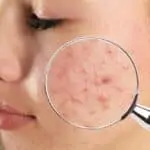

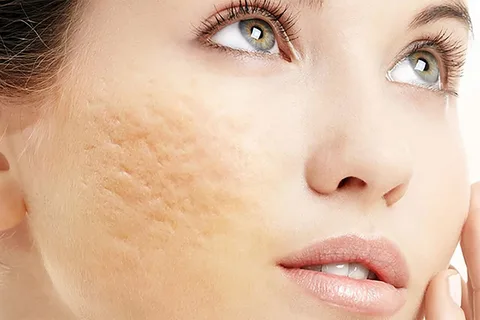
Some acne scars remain visible no matter how carefully you look after your skin. They may appear as shallow depressions across the cheeks, becoming more noticeable under overhead lighting or when you turn your face to the side.
In some cases, the problem lies beneath the skin rather than on its surface. Fibrous bands formed during the healing of acne can pull the skin down, leaving an indentation that does not disappear with creams, peels or conventional skincare.
Subcision treatment works by releasing these bands. Instead of resurfacing the skin, the procedure targets the attachments responsible for certain depressed scars.
It is particularly useful for selected rolling acne scars, although the suitability of each scar needs to be assessed individually.
Why Do Some Acne Scars Look Depressed?
Not all acne scars develop in the same way.
When inflammation damages the deeper layers of the skin, healing can produce a loss of tissue, fibrous attachments or both. Some scars become narrow and deep, while others form broader depressions.
Rolling scars often have gently sloping edges and create an uneven, wave-like appearance across the skin. In some of these scars, fibrous bands attach the skin to the tissue underneath.
These attachments can hold the scar down even when the surrounding skin is relatively smooth.
Subcision is designed to release that tension.
Which Acne Scars Can Subcision Treat?
The most important factor is not simply how deep a scar looks. It is whether the depression is being held down by fibrous tissue.
| Scar Appearance | Where Subcision May Fit |
|---|---|
| Rolling scars with broad, sloping depressions | Often suitable when underlying tethering is present. |
| Depressed scars held down by fibrous tissue | Releasing the attachments may improve the indentation. |
| Selected boxcar scars | May help when tethering contributes to the depression. |
| Narrow, deep ice-pick scars | Usually require a different treatment approach. |
| Raised or thickened scars | Subcision is generally not the appropriate treatment. |
A person may have several scar types on the same cheek. Treating all of them with subcision would not necessarily produce the best result.
What Happens During Subcision?
The treatment begins with an examination of the scars to identify which depressions are likely to be tethered.
After the area is cleaned and local anaesthesia is administered, a specialised needle or blunt cannula is introduced beneath the skin through a small entry point.
The instrument is carefully moved within the appropriate tissue plane to release the fibrous bands holding the scar down.
You may feel pressure or movement during the procedure, but local anaesthesia is used to reduce discomfort.
The number of scars being treated and the extent of the tethering determine how long the appointment takes.
Because the work is performed beneath the skin, subcision does not require a traditional surgical incision. However, it is still an invasive procedure and can cause bruising, swelling and other complications.
Why Isn’t Laser Treatment Enough for Every Depressed Scar?
Laser resurfacing can improve certain aspects of acne scarring by stimulating skin remodelling and addressing surface texture.
But a scar that is firmly attached to deeper tissue presents a different problem.
If the skin remains pulled down by fibrous bands, resurfacing the surface alone may not adequately correct the depression.
Subcision releases those attachments. Fractional laser or RF microneedling may then be useful for improving other aspects of the scar.
This does not mean that everyone needs combination treatment. It means different scar features sometimes require different techniques.
Can Subcision Be Combined with Other Treatments?
Some depressed scars involve both tethering and tissue loss. Releasing the attachments may improve the depression, but it may not fully replace the volume that has been lost.
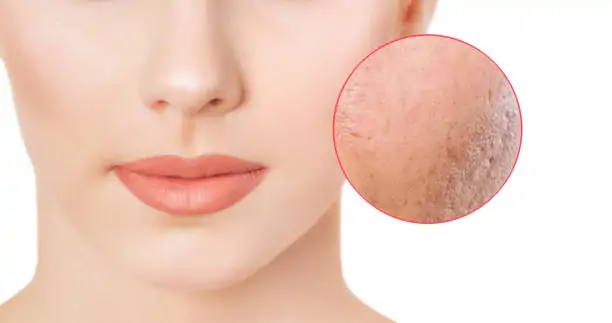
In selected cases, a dermal filler may be considered after subcision to support the treated area.
Fractional laser or RF microneedling can also be used as part of a broader acne scar treatment plan when surface irregularities remain.
PRP is sometimes offered alongside subcision, although evidence for additional benefit is less established than for the mechanical release of tethered scars.
The decision to combine procedures should be based on the scar pattern rather than applying the same combination to every patient.
What Will My Skin Look Like After Subcision?
Bruising is one of the most recognisable effects of subcision.
Because the instrument works beneath the skin, small blood vessels may be disrupted during the release of fibrous tissue. Swelling, tenderness and temporary redness can also occur.
Some people develop noticeable bruising across the treated area, while others experience relatively mild changes.
Bruising often improves over one to two weeks, although recovery varies and can take longer.
Temporary firmness or small lumps may also develop during healing. Less common risks include infection, persistent nodules, pigmentation changes, haematoma, injury to deeper structures or unsatisfactory results.
Your practitioner will explain how to care for the treated area and when to seek medical attention.
When Will I See a Difference?
The skin can appear temporarily smoother immediately after treatment because of swelling. That early appearance should not be confused with the final result.
Once swelling settles, the improvement from releasing the fibrous attachments becomes easier to assess.
Further changes may develop over the following weeks and months as the treated tissue heals and remodels.
Some scars respond after one session, while others require additional treatment. The number of sessions cannot be determined reliably from scar depth alone.
Can Subcision Remove Acne Scars Completely?
Subcision can improve selected depressed scars, but complete removal should not be expected.
Older or deeper scars may contain both fibrous attachments and permanent tissue loss. Releasing the attachments can reduce the depression without restoring the skin to its original condition.
A realistic goal is to make the scar less noticeable, particularly in lighting that previously emphasised the indentation.
For people with several types of acne scars, improvement may require more than one technique.
Subcision Treatment in Istanbul
If you are travelling to Istanbul for subcision, it helps to arrange an assessment before finalising your treatment schedule.
Clear photographs taken in natural and angled lighting can provide an initial impression of the scars. However, the presence and extent of tethering are best assessed in person.
During the consultation, the scar pattern, skin type, history of acne and previous treatments can be reviewed.
Active inflammatory acne may need to be controlled before scar treatment begins.
Subcision is commonly performed as an outpatient procedure, but bruising may remain visible for several days or longer.
If you are visiting Turkey for a short period, allowing time for the initial recovery and any recommended follow-up is sensible, particularly when treating multiple areas.
Subcision Treatment Cost in Istanbul
The cost of subcision treatment in Istanbul depends on the number of scars, the size of the treatment area and whether additional procedures are included.
Treating a small number of tethered scars is different from treating extensive scarring across both cheeks.
If filler, laser resurfacing or another procedure is recommended, this can also affect the overall cost.
An accurate treatment plan and quotation are best prepared after the scars have been examined.
Frequently Asked Questions
Is subcision effective for rolling acne scars?
Rolling scars are among the scar types most commonly treated with subcision, particularly when fibrous bands are pulling the skin downward.
The procedure releases these attachments, allowing the depressed area to become less tethered. The degree of improvement depends on the scar’s structure, depth and any associated tissue loss.
Not every rolling scar will respond equally, and some patients benefit from additional treatments.
Is subcision painful?
Local anaesthesia is used to reduce pain during the procedure. You may still notice pressure, pulling or movement beneath the skin as the fibrous attachments are released.
After the anaesthetic wears off, tenderness or soreness can occur, particularly in areas where several scars have been treated.
Discomfort generally improves as the tissue heals, although the experience varies with the extent of treatment.
How many subcision sessions will I need?
Some tethered scars improve after a single session, while others need further treatment.
The number of sessions depends on how strongly the scar is attached, the amount of tissue loss and the response to the initial procedure.
Rather than scheduling a fixed number of sessions in advance, it is often more useful to assess the result after the initial healing period.
Does subcision work for ice-pick scars?
Ice-pick scars are narrow, deep depressions that usually have a different structure from rolling scars.
Because they are not typically caused by broad fibrous attachments, subcision alone is generally not the preferred treatment.
Other scar-specific techniques may be more appropriate. Patients with mixed acne scarring may need different treatments for different scars.
Will subcision leave new scars?
Subcision is performed through a small needle or cannula entry point rather than a conventional surgical incision.
The entry point usually heals with minimal visible change, but any procedure that penetrates the skin carries some risk of pigmentation changes or scarring.
The risk may be influenced by skin type, healing history, treatment technique and aftercare.
Can I have subcision and fractional laser together?
Both treatments may be useful when acne scars involve tethering as well as surface texture changes.
Subcision addresses the fibrous attachments beneath the scar, while fractional laser targets aspects of the skin’s surface and remodelling response.
They may be planned in the same overall treatment programme, but the timing should be determined according to the skin and the procedures involved.
How long does bruising last after subcision?
Bruising commonly lasts several days and can remain visible for one to two weeks. More extensive treatment may lead to a longer recovery.
The amount of bruising varies between patients and can be influenced by the treatment area, technique and medications that affect bleeding.
If you are travelling for treatment, it is worth allowing for visible bruising rather than assuming the skin will look normal the next day.
Are subcision results permanent?
Once a fibrous attachment has been successfully released, the improvement can be long-lasting.
However, scar tissue can reform, some depressions may remain and not every scar responds completely.
Subcision does not prevent new acne scars from developing, so active acne should also be appropriately managed.
Can subcision treat scars caused by an injury?
Certain depressed scars following trauma or surgery may involve fibrous attachments similar to those found beneath tethered acne scars.
In these situations, subcision may be considered after examining the scar and the surrounding anatomy.
It is not appropriate for every traumatic or surgical scar, particularly when the scar is raised, unstable or located near structures that increase procedural risk.
Is subcision suitable for darker skin tones?
Subcision can be performed in patients with different skin tones, but the risk of post-inflammatory hyperpigmentation and other complications still needs to be considered.
The treatment technique, scar characteristics and any additional laser procedures should be selected carefully.
Patients with a history of pigmentation changes or abnormal scarring should discuss this during the consultation.
Content Responsibility and Medical Review

Medical expert
Medical Aesthetic Physician
Dr. Nur Afşar has been practicing in the field of medical aesthetics for over seven years. She has experience in a range of non-surgical aesthetic treatments, particularly Botox, dermal fillers, mesotherapy, and skin rejuvenation procedures. Her approach to treatment planning focuses on achieving natural and balanced results.
Medical content lead for Subcision Treatment: Dr. Nur Afşar
Last updated: