Renuvion J-Plasma is a minimally invasive skin-tightening technology that combines radiofrequency energy with helium plasma. It is often used as part of body contouring when loose skin is a concern, particularly after fat has been removed with liposuction.

At Quartz Clinique in Istanbul, Renuvion is planned according to the amount of skin laxity, the area being treated and whether fat removal or additional body contouring is also needed.
What Is Renuvion J-Plasma?
Renuvion, also widely known as J-Plasma, is a technology used beneath the skin to encourage soft-tissue contraction.
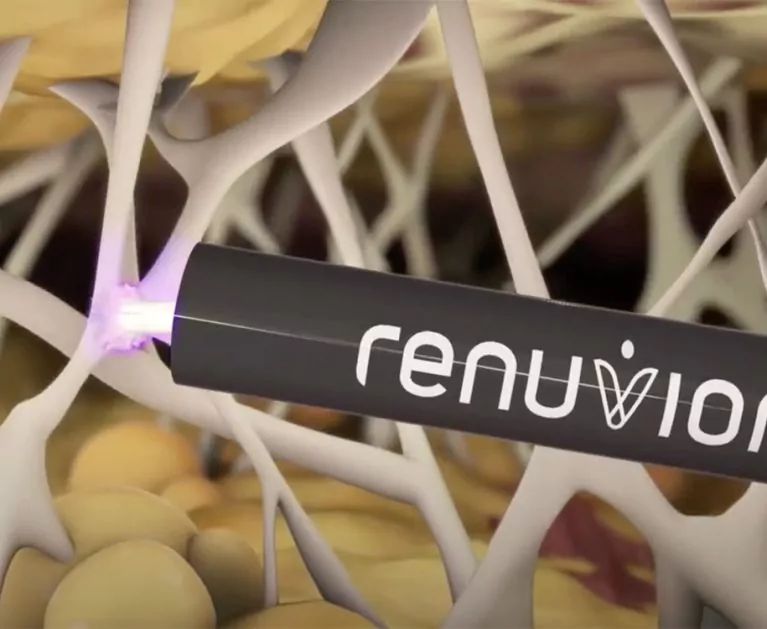
The device combines helium with radiofrequency (RF) energy. This creates helium plasma that delivers controlled energy to the tissue beneath the skin. The tissue is heated rapidly and then cools quickly, producing contraction in collagen-rich tissue.
Patients still commonly use the name J-Plasma when researching the procedure, while Renuvion is the current brand name. They are not two separate treatments.
Renuvion is particularly relevant when the concern is not only unwanted fat but also how well the skin may adapt to the new body contour after fat removal.
Renuvion J-Plasma
| Feature | Details |
|---|---|
| Technology | Helium plasma and radiofrequency (RF) energy |
| Main Purpose | Soft-tissue contraction and improvement of skin laxity |
| Common Areas | Abdomen, waist, arms, thighs, back, neck and under the chin |
| Can It Be Combined with Liposuction? | Yes, in suitable patients |
| Can It Be Combined with VASER? | Yes, when fat removal and skin contraction are both part of the treatment plan |
| Anaesthesia | Depends on the treatment area and whether other procedures are performed |
| Recovery | Varies according to the treatment area and combined procedures |
| Results | Develop gradually as swelling settles and the tissues heal |
How Does Renuvion J-Plasma Work?
Renuvion works beneath the skin rather than treating only the surface.
A slim handpiece is introduced through small access points and moved through the treatment area. Helium plasma and RF energy are then delivered to the tissue beneath the skin.
The controlled heat causes an immediate contraction response in collagen-rich tissue. Healing and tissue remodelling continue afterwards, which is why the appearance can continue to change over the following months.
This also explains why the result should not be judged immediately after treatment, especially when J-Plasma is combined with liposuction and there is significant postoperative swelling.
Which Areas Can Be Treated with J-Plasma?
Renuvion can be considered for different areas where skin laxity affects the overall contour.
Common areas include:
- Abdomen
- Waist and flanks
- Upper arms
- Inner thighs
- Back and bra-line area
- Neck
- Under the chin
The important factor is not simply the location but how loose the skin is.
Someone with mild or moderate laxity may be a very different candidate from someone with a large amount of hanging or excess skin.
Renuvion can encourage tissue contraction, but it cannot remove a significant fold of excess skin in the way surgery can.
J-Plasma with Liposuction
Renuvion is often considered alongside liposuction because the two treatments address different parts of the same body-contouring problem.
Liposuction is used to remove unwanted fat.
Renuvion is used to address the tissue beneath the skin and encourage contraction.
This can be particularly useful when removing fat is expected to leave a degree of skin laxity behind. The abdomen, waist, arms, thighs and back are common examples.
The treatment plan should therefore consider both how much fat needs to be removed and how well the skin is likely to adapt afterwards.
The FDA has specifically cleared the Renuvion APR Handpiece for coagulation of subcutaneous soft tissues following liposuction for aesthetic body contouring.
Renuvion J-Plasma with VASER Liposuction
Renuvion can also be combined with VASER Liposuction when both excess fat and skin laxity are part of the concern.
The two technologies have different roles. VASER is used to assist with fat removal and body contouring, while Renuvion is used beneath the skin to encourage tissue contraction.
For example, when treating the abdomen or waist, removing unwanted fat may improve the overall shape, but the skin also needs to adapt to the new contour. If skin laxity is expected to be an issue, Renuvion may be included in the treatment plan.
Whether the combination is suitable depends on the amount of fat, skin quality, degree of laxity and the result the patient would like to achieve.
J-Plasma vs Liposuction
It is common to see patients searching for “J-Plasma or liposuction?”, but they do not perform the same job.
If excess fat is the main concern, liposuction may be required.
If loose skin or reduced tissue firmness is also part of the concern, Renuvion may be considered as an additional treatment.
In simple terms:
- Liposuction removes fat.
- Renuvion encourages soft-tissue contraction.
- Some patients need one. Others may benefit from both.
The decision is based on body composition, skin quality and the amount of correction required rather than choosing whichever technology sounds newer.
J-Plasma vs Tummy Tuck
Renuvion should not be presented as an alternative to a tummy tuck for every patient.
A tummy tuck, or abdominoplasty, surgically removes excess abdominal skin. Depending on the individual surgical plan, it can also address other abdominal concerns that an energy-based procedure cannot correct.
Renuvion does not remove large sections of loose skin.
For someone with relatively limited laxity, particularly alongside liposuction, it may be worth considering. But after significant weight loss or pregnancy, where there is a substantial amount of excess abdominal skin, abdominoplasty may be the more appropriate option.
The right question is therefore not “Which procedure is better?” but rather “What is causing the contour problem?”
Who Is a Good Candidate for Renuvion J-Plasma?
Renuvion may be suitable for adults who have some degree of skin or soft-tissue laxity but do not necessarily need large areas of skin surgically removed.
It may be considered when:
- Skin laxity is mild to moderate
- Liposuction is already being planned
- The skin may benefit from additional contraction after fat removal
- There is localised looseness around the abdomen, arms, thighs, neck or similar areas
- The patient understands the difference between tissue tightening and surgical skin removal
Age alone does not determine whether someone is a good candidate.
A younger person can have significant loose skin after major weight loss, while an older patient may still have relatively good skin elasticity.
The actual tissue needs to be assessed.
How Is Renuvion J-Plasma Performed?
The details depend on the treatment area and whether J-Plasma is being performed alone or with liposuction.
Small access points are used to place the handpiece beneath the skin. The device is then passed through the planned treatment area to deliver energy to the underlying tissue.
When liposuction is performed at the same time, the procedures can be planned together through the body-contouring access points.
The type of anaesthesia and procedure time vary considerably.
Treating a relatively small area under the chin is very different from treating the abdomen, waist and back together with VASER Liposuction, so there is no meaningful single treatment time or anaesthesia plan that applies to everyone.
When Will I See J-Plasma Results?
Some contraction occurs during the procedure, but this is not the same as seeing the final body contour.
Swelling is expected during the early recovery period and can temporarily hide the result.
Over the following weeks, the swelling begins to settle and the treated area becomes easier to assess. Tissue healing and remodelling continue afterwards, so further changes may become visible over the following months.
Patients having Renuvion together with extensive liposuction generally need to be especially patient with the early result because both procedures contribute to swelling.
How Long Do J-Plasma Results Last?
Renuvion creates a change within the treated tissue rather than producing a temporary surface effect.
That does not mean the body will remain unchanged forever.
Ageing continues, and the appearance of the treated area can also be affected by:
- Weight gain or loss
- Pregnancy
- Changes in skin elasticity
- Lifestyle
- Individual tissue quality
Maintaining a relatively stable weight is particularly helpful after body-contouring procedures.
Recovery After Renuvion J-Plasma
Recovery is closely related to how much treatment has been performed.
Someone having Renuvion on a small isolated area will not have the same recovery as someone having multi-area liposuction and Renuvion during the same procedure.
Temporary effects can include:
- Swelling
- Bruising
- Tenderness
- Tightness
- Temporary numbness or altered sensation
- Discomfort around the access points
Compression garments may be recommended when Renuvion is combined with liposuction.
How quickly someone can return to work or exercise depends on the extent of the procedure and individual healing rather than a fixed number of days.
This is particularly important for patients travelling to Istanbul, as return flights should be planned around the actual procedure and postoperative checks.
Renuvion J-Plasma Risks and Safety
Although Renuvion is often described as minimally invasive, it is still a medical procedure performed beneath the skin.
Possible complications can include swelling, bruising, pain, temporary sensory changes, contour irregularities, fluid collection, infection, thermal injury, burns, scarring and other procedure-related complications.
The overall risk profile also depends on whether liposuction or another surgical procedure is performed at the same time.
For this reason, patient selection, treatment planning, understanding of anatomy and correct use of the device are important.
It is also worth being precise about FDA terminology. Renuvion has specific FDA clearances for defined handpieces and indications; it is more accurate to refer to those individual clearances than to make a broad statement that every use of “J-Plasma is FDA approved.”
Renuvion J-Plasma in Istanbul
For international patients considering Renuvion J-Plasma in Istanbul, the first step is working out what is actually creating the concern.
Is it excess fat?
Loose skin?
Or a combination of both?
At Quartz Clinique, this assessment may include:
- Amount and distribution of unwanted fat
- Degree of skin laxity
- Skin quality
- Areas requiring treatment
- Previous liposuction or surgery
- Whether VASER Liposuction is appropriate
- Whether surgical skin removal would provide a better result
- Expected recovery and travel schedule
This is especially important when travelling to Turkey for a combined body-contouring procedure.
A patient having Renuvion on one small area has very different needs from someone travelling for abdominal, waist and back liposuction with J-Plasma.
How Long Should I Stay in Istanbul After J-Plasma?
There is no standard number of days that suits every patient.
The recommended stay depends on the treatment area, number of areas, anaesthesia, whether liposuction has also been performed and how recovery is progressing.
For international patients, it is sensible to leave enough time for an early postoperative review before flying home.
If Renuvion is part of a larger VASER Liposuction or body-contouring procedure, travel should be planned around the complete surgery rather than J-Plasma alone.
Renuvion J-Plasma Cost in Istanbul
The cost of Renuvion J-Plasma in Istanbul varies according to the treatment plan.
The main factors include:
- Treatment area
- Number of areas
- Size of the areas
- Whether liposuction is required
- Whether VASER is used
- Anaesthesia requirements
- Complexity of the procedure
This is why a single advertised J-Plasma price can be misleading.
A patient treating a relatively small area will not have the same treatment plan as someone undergoing VASER Liposuction of several body areas followed by Renuvion.
An individual assessment is needed before an appropriate treatment plan and cost can be determined.
Frequently Asked Questions About Renuvion J-Plasma
Are J-Plasma and Renuvion the same?
Yes. J-Plasma is the earlier name that many patients still use when searching for the treatment. Renuvion is the current brand name for the helium plasma and radiofrequency technology.
Is J-Plasma non-surgical?
It is better described as minimally invasive when it is used beneath the skin. Small access points are required to introduce the handpiece, and it is frequently performed as part of a surgical liposuction procedure.
Does J-Plasma remove fat?
No. Renuvion is not primarily a fat-removal treatment. Liposuction or VASER Liposuction is used when unwanted fat needs to be removed.
Can J-Plasma be combined with VASER Liposuction?
Yes, in suitable patients. VASER is used for fat removal and body contouring, while Renuvion can be added when tissue contraction is also part of the treatment goal.
Can J-Plasma replace a tummy tuck?
Not when there is a significant amount of excess skin that needs to be surgically removed. Renuvion and abdominoplasty address different degrees and types of skin laxity.
Is J-Plasma good for loose skin after liposuction?
It may be considered when additional tissue contraction is desirable after fat removal. Whether it is appropriate depends on the amount of loose skin and the patient’s tissue quality.
Can J-Plasma be used on the abdomen?
The abdomen is one of the areas where Renuvion may be incorporated into body-contouring treatment. The plan depends on how much of the concern comes from fat and how much comes from skin laxity.
Does J-Plasma leave scars?
Renuvion uses small access points rather than the longer incisions needed for skin-removal surgery. These access points can still leave small marks, so completely scar-free treatment cannot be guaranteed.
When will I see the final result?
The contour becomes clearer as postoperative swelling settles. Tissue healing and remodelling continue afterwards, so the treated area may continue to change over the following months.
Is one J-Plasma treatment enough?
Renuvion is often performed as part of one planned procedure. However, the final treatment strategy depends on the patient’s anatomy, amount of laxity and whether other procedures are required.
References
- U.S. Food and Drug Administration (FDA). Update: Use of Renuvion/J-Plasma Device for Certain Aesthetic Procedures – FDA Safety Communication.
- U.S. Food and Drug Administration. 510(k) Premarket Notification K230272 – Renuvion APR Handpiece.
- Gentile RD. Renuvion/J-Plasma for Subdermal Skin Tightening, Facial Contouring and Skin Rejuvenation of the Face and Neck. Facial Plastic Surgery Clinics of North America. 2019.
Content Responsibility and Medical Review

Medical expert
Specialist in Plastic, Reconstructive and Aesthetic Surgery
Leyla Arvas graduated from Istanbul University, Istanbul Faculty of Medicine in 1998 and is a specialist in Plastic, Reconstructive and Aesthetic Surgery.
Dr. Leyla Arvas sees patients at her private practice and performs her surgeries at Acıbadem Hospital and Memorial Hospital, both of which are accredited by the Joint Commission International (JCI).
Medical content lead for Renuvion J-Plasma: MD, Leyla Arvas, MD
Last updated: