
Sculptra is a PLLA-based collagen biostimulator designed to gradually improve facial volume, skin quality, and structural support. At Quartz Clinique in Istanbul, Sculptra treatment is individually planned according to facial anatomy, age-related volume changes, skin quality, and aesthetic goals.
What Is Sculptra?
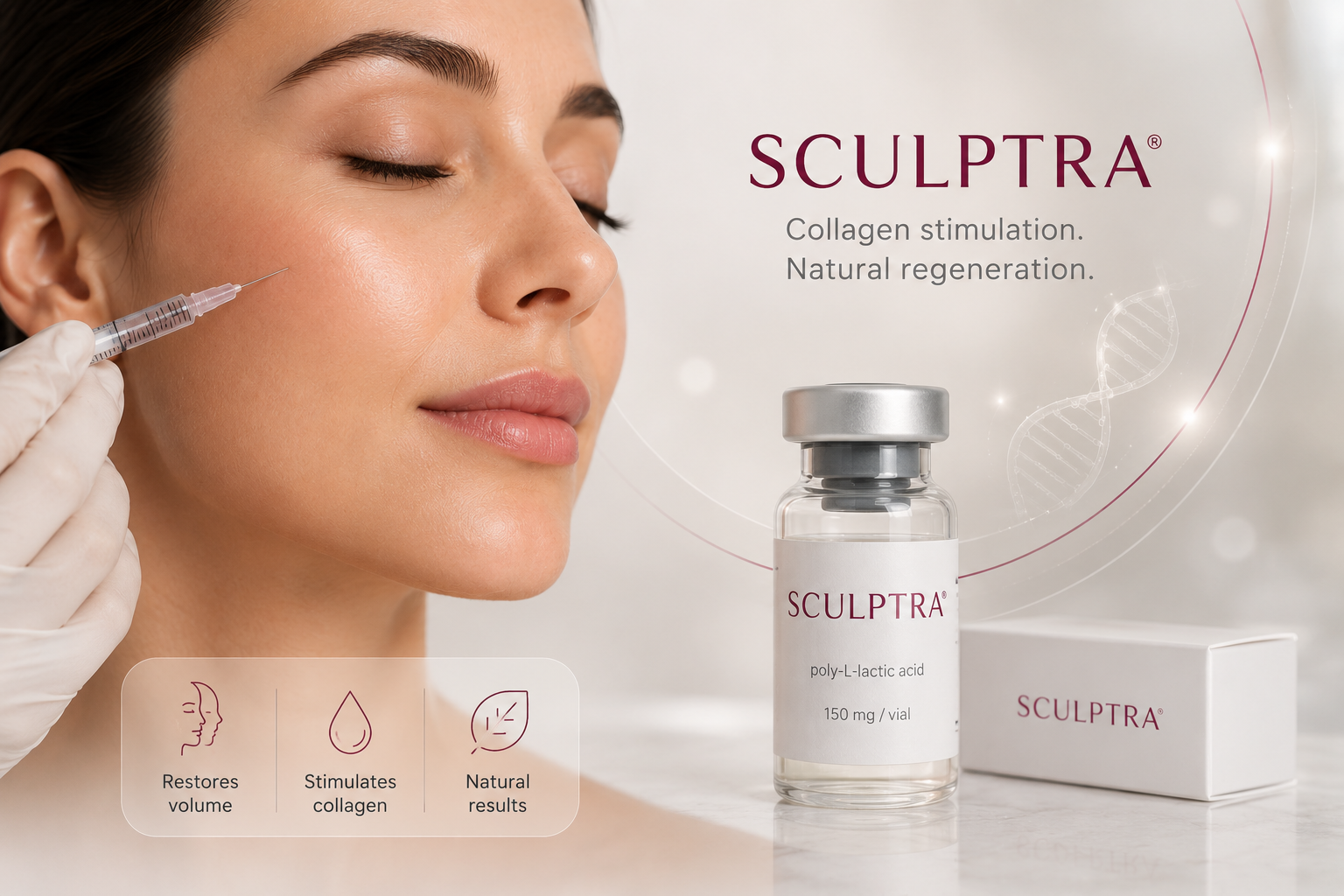
Sculptra is an injectable treatment containing poly-L-lactic acid (PLLA), a biocompatible and biodegradable material that stimulates the body’s natural collagen production.
Facial ageing is not limited to the development of lines and wrinkles. Over time, collagen levels decrease, tissue support weakens, and facial volume distribution changes. These changes can contribute to hollowing, loss of definition, and a more tired appearance.
Unlike traditional hyaluronic acid fillers, which primarily add volume to a specific area, Sculptra works as a collagen biostimulator. It encourages the skin and underlying tissues to produce new collagen, so improvements develop progressively rather than appearing as an immediate filler effect.
What Does Sculptra Do?
Sculptra may be considered for people experiencing age-related facial volume loss and reduced tissue support who prefer a gradual approach to facial rejuvenation.
Depending on individual needs, Sculptra may help to:
- Stimulate natural collagen production
- Improve facial volume loss
- Support skin firmness and structural quality
- Improve facial contours
- Soften the appearance of certain folds and lines
- Restore support in areas affected by age-related volume changes
- Create a gradual and natural-looking improvement
The aim of treatment is not to create excessive volume or alter the natural features of the face. The amount and placement of Sculptra should be planned according to individual facial proportions and anatomy.
How Does Sculptra Work?
The active ingredient in Sculptra is poly-L-lactic acid (PLLA).
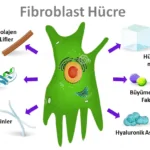
After Sculptra is injected into the appropriate tissue plane, PLLA particles stimulate a biological response that encourages new collagen formation. The PLLA is gradually broken down by the body, while the collagen produced in response to treatment may continue to provide structural support to the tissue.
This mechanism distinguishes Sculptra from conventional dermal fillers.
Hyaluronic acid fillers provide much of their initial effect through the physical presence of the injectable gel. Sculptra, in contrast, is designed to stimulate the body’s own collagen production, meaning its intended results become progressively more noticeable over the following weeks and months.
Which Areas Can Be Treated with Sculptra?
Sculptra can be used in selected areas of the face where collagen loss and changes in facial volume have occurred.
Depending on facial anatomy and individual needs, treatment may include:
- Cheeks
- Mid-face
- Cheekbone area
- Temples
- Lateral face
- Lower face
- Selected areas around the jawline
Sculptra is not suitable for every facial area. Delicate regions such as the lips and certain areas around the eyes generally require different products and treatment approaches.
For this reason, treatment planning should consider not only how much product is used but also where it is placed and at what anatomical depth.
How Is Sculptra Treatment Performed?
Before treatment, the face is assessed from different angles to evaluate facial proportions, areas of volume loss, skin quality, and tissue support.
Sculptra is prepared according to the appropriate protocol and injected into selected areas at the required anatomical depth. Depending on the treatment area and technique, a needle or cannula may be used.
There is no standard amount of Sculptra that is appropriate for every patient. The treatment plan may vary according to:
- Facial anatomy
- Degree of volume loss
- Skin and tissue quality
- Number of areas being treated
- Previous aesthetic procedures
- Individual treatment goals
For patients travelling to Istanbul for Sculptra treatment, the potential number of sessions should also be considered when planning the treatment schedule.
When Do Sculptra Results Appear?
Sculptra is designed to provide gradual results rather than an immediate transformation.
The treated areas may initially appear fuller after the procedure. However, some of this early fullness is related to the liquid used to prepare the product and generally decreases after treatment.
The intended effect develops progressively as new collagen is produced.
Changes may become more noticeable over the following weeks and continue to develop over the following months. The speed and extent of the response vary depending on factors such as age, skin quality, treatment area, and individual collagen production.
This gradual development is one of the main differences between Sculptra and conventional dermal fillers.
How Many Sculptra Sessions Are Needed?
The number of Sculptra sessions required varies from person to person.
Some patients may require fewer sessions, while others may benefit from a treatment series. Factors that can influence the number of sessions include:
- Degree of facial volume loss
- Age
- Skin quality
- Areas being treated
- Individual collagen response
- Desired level of improvement
The response to the initial treatment can be evaluated before deciding whether an additional session is appropriate.
Patients travelling from abroad should therefore discuss the expected treatment schedule before arranging their visit to Istanbul.
How Long Does Sculptra Last?
Sculptra is known for its gradual and potentially long-lasting effect, but the duration of results varies between individuals.
Clinical studies have reported aesthetic improvements lasting approximately two years or longer in some patients. This does not mean that every patient will experience the same duration.
The longevity of Sculptra results can be influenced by:
- Age
- Skin quality
- Lifestyle
- Degree of initial volume loss
- Number of treatment sessions
- Amount of product used
- Individual collagen response
The natural ageing process also continues after treatment, so results and their duration should always be considered individually.
Does Sculptra Dissolve Over Time?
Yes. The poly-L-lactic acid contained in Sculptra is biodegradable and is gradually metabolised by the body.
However, the time PLLA remains within the tissue is not the same as the duration of the aesthetic effect.
During this period, Sculptra stimulates collagen production. The newly formed collagen may continue to provide structural support even as the PLLA itself is gradually broken down.
This is one of the reasons why Sculptra is classified as a collagen biostimulator rather than a conventional volumising filler.
Sculptra vs Hyaluronic Acid Fillers
Sculptra and hyaluronic acid fillers are both injectable aesthetic treatments, but they work through different mechanisms.
Hyaluronic acid fillers are generally used when direct volume, definition, or projection is required in a particular area. Depending on the product and treatment area, the volumising effect can usually be seen shortly after treatment.
Sculptra primarily works by stimulating collagen production. Its intended effect develops gradually and is generally used to address broader changes in facial volume and tissue support.
Therefore, Sculptra should not necessarily be considered a replacement for hyaluronic acid filler. The appropriate treatment depends on facial anatomy, the area being treated, and the desired result.
In selected cases, Sculptra and hyaluronic acid fillers may be used for different purposes within the same overall treatment plan.
Sculptra vs Dermal Fillers: Quick Comparison
| Feature | Sculptra | Hyaluronic Acid Filler |
|---|---|---|
| Main Ingredient | Poly-L-lactic acid (PLLA) | Hyaluronic acid |
| Treatment Type | Collagen biostimulator | Dermal filler |
| Primary Purpose | Stimulates collagen and supports gradual tissue improvement | Provides direct volume, contour, or definition |
| Results | Develop gradually over weeks and months | Initial volumising effect is generally visible shortly after treatment |
| Treatment Approach | Addresses collagen loss and broader changes in tissue support | Targets volume and shape in specific areas |
| Hyaluronidase | Cannot be dissolved with hyaluronidase | Suitable HA fillers can generally be dissolved with hyaluronidase |
Who Is a Good Candidate for Sculptra?
Sculptra may be suitable for adults who have developed age-related facial volume loss, reduced tissue support, or changes in skin quality and prefer a gradual collagen-stimulating treatment.
Potential candidates may include people who:
- Have experienced facial volume loss over time
- Want to support natural collagen production
- Prefer gradual rather than immediately noticeable volume
- Want to improve overall facial tissue support
- Are looking for an alternative or complement to traditional fillers
However, suitability cannot be determined solely by aesthetic concerns.
Medical history, medications, skin condition, previous treatments, and individual risk factors should be assessed before the procedure. A medical consultation is therefore necessary to determine whether Sculptra is appropriate for the individual.
Sculptra Recovery and Aftercare
Sculptra is a non-surgical injectable treatment and generally involves limited downtime.
Temporary reactions at or around the injection sites may include:
- Redness
- Swelling
- Tenderness
- Bruising
Many patients can return to their usual daily activities relatively quickly, although swelling or bruising may remain visible for a period of time.
Post-treatment recommendations can vary according to the treatment protocol. If massage is advised after Sculptra, it should be performed according to the practitioner’s instructions regarding frequency, duration, and technique.
Patients should also follow any individual aftercare recommendations provided following the procedure.
Sculptra Side Effects and Risks
As with other injectable aesthetic treatments, Sculptra may cause temporary injection-related effects such as redness, swelling, bruising, tenderness, or discomfort.
Less commonly, palpable firmness, papules, or nodules may occur within the treated areas.
Careful patient selection, correct preparation of the product, appropriate injection depth, anatomical knowledge, and injection technique are important considerations when performing Sculptra treatment.
Any unusual, persistent, or worsening symptoms after treatment should be medically evaluated.
Sculptra Treatment in Istanbul
Istanbul is an established destination for international patients seeking non-surgical aesthetic treatments as well as surgical procedures.
At Quartz Clinique, Sculptra treatment is planned according to the patient’s facial anatomy and individual needs rather than using the same treatment protocol for everyone.
For international patients considering Sculptra in Istanbul, treatment planning may include:
- Assessment of facial anatomy and volume loss
- Identification of suitable treatment areas
- Estimated amount of product required
- Expected number of sessions
- Recovery and aftercare considerations
- Follow-up planning
Patients travelling specifically for Sculptra should keep in mind that the final effect will not be visible during a short stay in Istanbul.
Sculptra works progressively. Collagen stimulation continues after the procedure, and changes develop over the following weeks and months.
Sculptra Cost in Istanbul
The cost of Sculptra treatment in Istanbul depends on the individual treatment plan rather than a single standard treatment price.
Factors that may affect the overall cost include:
- Number of Sculptra vials required
- Number of treatment areas
- Degree of facial volume loss
- Number of sessions
- Individual treatment plan
A patient requiring treatment in a limited area may not require the same amount of product as someone undergoing a more comprehensive facial treatment.
For this reason, the appropriate amount of Sculptra and the overall treatment plan should be determined following an individual assessment.
Frequently Asked Questions About Sculptra
Is Sculptra a dermal filler?
Sculptra is an injectable aesthetic treatment, but it does not work in the same way as a traditional hyaluronic acid dermal filler. It contains poly-L-lactic acid and primarily works as a collagen biostimulator, with results developing gradually as collagen production increases.
How many vials of Sculptra do I need?
There is no standard number of Sculptra vials suitable for everyone. The amount required depends on facial anatomy, degree of volume loss, treatment areas, skin and tissue quality, and the overall treatment plan.
Does Sculptra make the face look fuller?
Temporary fullness can occur immediately after treatment because of the liquid used to prepare the product. This initial appearance usually decreases. The intended Sculptra result develops gradually through collagen stimulation and is planned according to the patient’s existing facial proportions.
Can Sculptra be dissolved?
Sculptra cannot be dissolved with hyaluronidase because it is not a hyaluronic acid filler. The PLLA particles are gradually biodegraded by the body over time.
Is Sculptra the same as Botox?
No. Sculptra and botulinum toxin work through different mechanisms. Botulinum toxin temporarily reduces the activity of selected muscles, whereas Sculptra is used to stimulate collagen production within treated tissues.
Can Sculptra be combined with other aesthetic treatments?
In suitable patients, Sculptra may be incorporated into a broader treatment plan alongside treatments such as botulinum toxin, hyaluronic acid fillers, or selected device-based procedures. The appropriate combination and timing should be determined individually.
How soon can I return to normal activities after Sculptra?
Many patients can return to normal daily activities shortly after treatment. However, temporary swelling, redness, tenderness, or bruising may occur, and individual recovery can vary.
When will I see the final Sculptra results?
Sculptra does not provide its intended final effect immediately. Improvements develop gradually as collagen production increases over the following weeks and months. The timing and degree of change vary between individuals.
How long should I stay in Istanbul after Sculptra?
Sculptra generally does not require a long recovery period. However, temporary swelling or bruising may occur, and travel plans should be discussed according to the individual treatment plan. Patients who may require additional sessions should also consider how follow-up treatment will be organised.
References
- U.S. Food and Drug Administration (FDA). Sculptra Aesthetic – Injectable Poly-L-Lactic Acid (PLLA), Instructions for Use and Patient Information.
- Vleggaar D, Fitzgerald R, Lorenc ZP, et al. Consensus Recommendations on the Use of Injectable Poly-L-Lactic Acid for Facial and Nonfacial Volumization. Journal of Drugs in Dermatology.
- Ferreira ACM, et al. Efficacy, Durability, and Safety of Collagen Biostimulators Based on Poly-L-Lactic Acid (PLLA) and Calcium Hydroxyapatite (CaHA) in the Face: A Systematic Review. Aesthetic Plastic Surgery.
Content Responsibility and Medical Review

Medical expert
Specialist in Plastic, Reconstructive and Aesthetic Surgery
Leyla Arvas graduated from Istanbul University, Istanbul Faculty of Medicine in 1998 and is a specialist in Plastic, Reconstructive and Aesthetic Surgery.
Dr. Leyla Arvas sees patients at her private practice and performs her surgeries at Acıbadem Hospital and Memorial Hospital, both of which are accredited by the Joint Commission International (JCI).
Medical content lead for Sculptra Treatment: MD, Leyla Arvas, MD
Last updated: