
Penile Shockwave Therapy (ESWT) for Erectile Dysfunction
Erectile dysfunction does not always mean being unable to achieve an erection. For some men, the difficulty is maintaining sufficient firmness during sexual activity. Others notice that erections have gradually become less reliable, even though sexual desire remains unchanged.
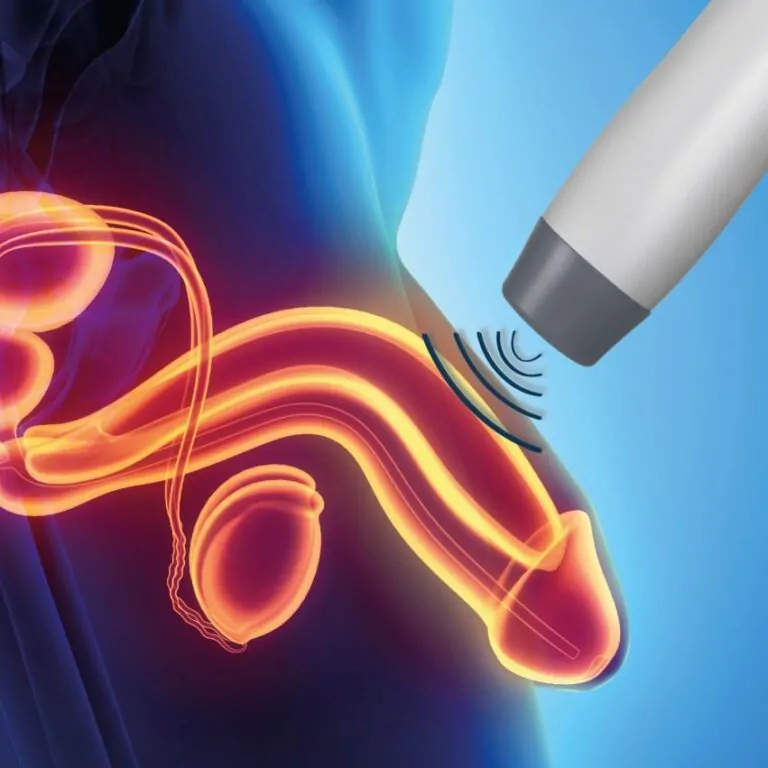
When circulation is part of the problem, penile shockwave therapy (ESWT) may be discussed as a non-invasive treatment option. The technique uses low-intensity acoustic shockwaves directed at penile tissues, with the aim of encouraging biological processes associated with vascular function.
It is an approach that has attracted interest because it does not involve injections into the penis, daily medication during the treatment sessions or surgery. However, it is not suitable for every cause of erectile dysfunction, and improvement cannot be guaranteed.
Understanding the cause of erection difficulties is the starting point for deciding whether shockwave therapy is worth considering.
What Is Penile Shockwave Therapy?
Penile shockwave therapy is a treatment technique in which controlled acoustic waves are delivered to selected areas of the penis using an external applicator.
For erectile dysfunction, the method is generally known as low-intensity extracorporeal shockwave therapy (Li-ESWT) or low-intensity shockwave treatment (Li-SWT).
Unlike high-energy shockwaves used in some other medical procedures, low-intensity treatment is designed to stimulate tissue responses without deliberately destroying tissue.
Researchers have investigated whether these acoustic waves can encourage processes involved in blood vessel function and tissue repair.
Some studies have reported improvements in erectile function, particularly among men with mild vascular erectile dysfunction. Nevertheless, results vary between studies, and questions remain about the most effective treatment protocol and the durability of the response.
How Does Shockwave Therapy Work for Erectile Dysfunction?
An erection depends on adequate blood flow into the erectile tissues, relaxation of smooth muscle and the ability to maintain blood within the penis.
When the blood vessels supplying the penis are affected by conditions such as diabetes, hypertension or atherosclerosis, erections may become weaker or more difficult to maintain.
Low-intensity shockwave therapy is being studied for its potential effects on the vascular environment within penile tissue.
The acoustic energy may stimulate biological signalling involved in vascular repair and the formation of small blood vessels. These proposed mechanisms are supported by experimental research, but the extent to which they produce lasting clinical improvement in humans remains under investigation.
Shockwave therapy should not be described as physically opening blocked arteries or permanently rebuilding the penile circulation.
Its potential benefit is more accurately understood as an improvement in erectile function in selected patients, rather than a guaranteed reversal of vascular disease.
Who May Benefit from Penile ESWT?
The strongest clinical interest in low-intensity shockwave therapy concerns men with vasculogenic erectile dysfunction, meaning erection difficulties related to impaired blood circulation.
It may be considered in selected patients with mild erectile dysfunction, particularly when vascular factors are suspected.
According to the European Association of Urology, low-intensity shockwave treatment may be considered for certain men with mild vasculogenic erectile dysfunction, for appropriately informed patients who cannot or prefer not to use oral erectile dysfunction medication, and for some men with a poor response to PDE5 inhibitors. This is a weak recommendation, reflecting limitations in the evidence.
Possible candidates may include men who:
- Have mild erectile dysfunction associated with vascular factors
- Experience reduced erection firmness or difficulty maintaining erections
- Have discussed medication-based treatment with a urologist
- Understand that results are variable and may not be long-lasting
- Prefer to explore a non-invasive option after medical assessment
Having diabetes, high blood pressure or a history of cardiovascular disease does not automatically make someone suitable for ESWT.
These conditions require careful evaluation, and treatment decisions should account for cardiovascular health, medications and the underlying cause of erectile dysfunction.
When Is Shockwave Therapy Less Likely to Help?
Not all erection difficulties are caused by impaired penile circulation.
Hormonal disorders, neurological conditions, medication effects, psychological factors and complications following pelvic surgery can also contribute to erectile dysfunction.
In these situations, penile shockwave therapy may not address the main cause.
Men with severe erectile dysfunction or extensive vascular disease may also respond less favourably than those with milder symptoms.
If low testosterone, significant performance anxiety or another identifiable condition is contributing to erection difficulties, that problem should be investigated and managed appropriately.
The purpose of a consultation is not simply to decide how many ESWT sessions are needed. It is to determine whether the treatment has a reasonable clinical rationale for the individual patient.
How Is Penile Shockwave Therapy Performed?
Penile ESWT is generally carried out as an outpatient procedure.
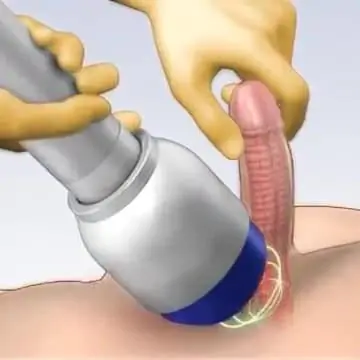
The patient lies comfortably while a clinician applies a coupling gel to the treatment area. A handheld applicator then delivers controlled acoustic pulses to selected regions of the penile shaft and, depending on the protocol, the penile base.
The procedure usually does not require general anaesthesia or surgical incisions.
Patients may feel tapping or mild discomfort during treatment, although the experience varies according to the device, energy settings and individual sensitivity.
A session commonly takes around 15–20 minutes, but the duration is not identical across all devices and treatment protocols.
After the session, patients can usually return to ordinary activities, provided they have no symptoms requiring further assessment.
How Many ESWT Sessions Are Needed?
There is no universally accepted ESWT protocol for erectile dysfunction.
Clinical studies have used different devices, energy levels, numbers of pulses, treatment locations and session schedules. This variation is one reason researchers have found it difficult to compare results directly.
Some protocols involve six sessions over several weeks, while others use a greater number of treatments or different intervals.
The number of sessions should therefore not be presented as a fixed requirement for every patient.
An individual plan may take account of the severity of erectile dysfunction, medical history, the treatment device and the protocol used by the treating clinician.
More sessions do not automatically mean a better outcome.
What Results Can Be Expected?
The main goal of penile shockwave therapy is to improve erectile function rather than increase penile size or sexual desire.
In some studies, men receiving low-intensity shockwave therapy have experienced improvements in erectile function scores compared with those receiving a sham procedure.
However, the degree of improvement varies, and not every patient experiences a meaningful change.
A man with mild vascular erectile dysfunction may respond differently from someone with severe erectile dysfunction associated with long-standing diabetes or extensive vascular disease.
Results should be assessed in terms of erection firmness, ability to maintain an erection and the impact on sexual activity.
ESWT is not a guaranteed cure for erectile dysfunction. Claims that every patient will regain normal erections or achieve permanent results are not supported by current evidence.
When Do the Effects of ESWT Become Noticeable?
Shockwave therapy is not intended to work in the same immediate way as medication taken shortly before sexual activity.
If improvement occurs, it may develop gradually during the weeks or months following treatment.
Clinical studies commonly assess outcomes at intervals such as one, three or six months after treatment, although follow-up schedules vary.
Some men may notice a change earlier, while others may experience little or no improvement.
It is also important to recognise that an early response does not necessarily predict how long the effect will last.
How Long Do Shockwave Therapy Results Last?
The duration of improvement after penile shockwave therapy remains uncertain.
Some studies have reported benefits lasting several months or longer in selected patients, but longer-term findings are inconsistent.
Underlying vascular health, age, diabetes, smoking, cardiovascular risk factors and the severity of erectile dysfunction may influence outcomes.
Even when a patient experiences improvement, erectile dysfunction can progress over time if the underlying medical factors remain uncontrolled.
For this reason, shockwave therapy should be considered within a broader sexual and cardiovascular health plan rather than as a permanent replacement for medical follow-up.
Penile ESWT vs Other Erectile Dysfunction Treatments
Shockwave therapy differs from established erectile dysfunction treatments in both its proposed mechanism and the strength of the supporting evidence.
| Treatment | Main Approach | Important Considerations |
|---|---|---|
| Low-intensity shockwave therapy | Uses external acoustic waves to investigate potential improvement in vascular erectile function | Non-invasive, but results and long-term effectiveness remain uncertain |
| Oral ED medication | Supports the physiological process involved in achieving an erection | Established treatment option; suitability depends on medical history and medication interactions |
| Vacuum erection device | Uses negative pressure to draw blood into the penis | Non-drug option that may require practice and appropriate use |
| Penile injection therapy | Delivers medication directly into erectile tissue | Can be effective but requires instruction and carries specific risks |
| Penile prosthesis | Surgically places a device to provide erection rigidity | Usually considered when other treatments are unsuitable or unsuccessful |
Treatment selection depends on the cause and severity of erectile dysfunction, patient preferences and the presence of other medical conditions.
Shockwave therapy is not necessarily more effective than medication simply because it is described as a regenerative approach.
Is Penile Shockwave Therapy Safe?
Published studies generally describe low-intensity penile shockwave therapy as well tolerated, with relatively few serious treatment-related adverse events reported.
However, this does not mean that the procedure is entirely free of risks or that long-term safety questions have been fully resolved.
Temporary discomfort, local redness or mild sensitivity may occur.
The safety profile also depends on the device and treatment settings. Focused shockwave systems and radial pressure-wave devices should not automatically be regarded as equivalent, because they deliver energy differently and have different supporting evidence.
Treatment should be performed only after appropriate medical evaluation and with a clear understanding of the equipment being used.
Patients should also be cautious about claims that a particular device or technique has been universally approved as a permanent cure for erectile dysfunction.
Is ESWT Approved for Erectile Dysfunction?
Medical guidance on penile shockwave therapy differs between professional organisations.
The European Association of Urology provides a weak recommendation for low-intensity shockwave treatment in selected patients with vasculogenic erectile dysfunction.
The American Urological Association considers low-intensity extracorporeal shockwave therapy investigational for erectile dysfunction, reflecting concerns about the consistency of evidence and long-term outcomes.
These positions are not identical, but both highlight the importance of informed patient selection and realistic expectations.
Approval of a medical device for one application should not be interpreted as proof that every advertised use of that device has been approved.
Does ESWT Increase Penis Size?
Penile shockwave therapy is not a recognised method of increasing penile length or circumference.
Its purpose in erectile dysfunction management is to investigate possible improvements in erectile function, particularly where vascular factors are involved.
If erections become firmer, a patient may notice a difference in the appearance of the erect penis. However, this should not be confused with anatomical enlargement.
Men interested in penile girth enhancement or lengthening should understand that these are separate concerns requiring different assessments.
Can ESWT Help with Premature Ejaculation?
Premature ejaculation and erectile dysfunction are different sexual health conditions, although they may occur together.
Penile shockwave therapy is primarily being investigated for erectile dysfunction, particularly cases involving impaired blood flow.
It is not an established first-line treatment for premature ejaculation.
If a man experiences both early ejaculation and difficulty maintaining an erection, a urologist should assess the relationship between the two conditions.
Treatment may involve addressing erectile dysfunction, using evidence-based approaches for premature ejaculation or combining appropriate therapies.
Can ESWT Be Combined with Erectile Dysfunction Medication?
- In selected cases, low-intensity shockwave therapy may be considered alongside oral medications such as PDE5 inhibitors.
- Some studies have investigated whether combining the approaches produces better outcomes than either treatment alone.
- Results have been mixed, and a lasting additional benefit has not been established for all patients.
- Medication should not be discontinued or adjusted simply because shockwave treatment has begun.
- A clinician should assess whether combination treatment is appropriate and whether any contraindications are present.
Penile Shockwave Therapy in Istanbul, Turkey
International patients considering penile shockwave therapy in Istanbul should begin with an assessment of the underlying erectile dysfunction rather than booking a fixed number of sessions without evaluation.
A urological consultation may include a review of medical history, medications, erection difficulties and relevant cardiovascular risk factors.
Depending on the findings, additional investigations may be recommended.
For patients travelling from abroad, the treatment schedule is an important practical consideration. Unlike a single-visit procedure, ESWT often involves multiple appointments over several weeks.
The proposed number of sessions, the device used and the expected follow-up should therefore be discussed before making travel arrangements.
Patients should also understand what will happen if treatment does not produce the expected improvement and whether continued care will be available after returning home.
Penile Shockwave Therapy Cost in Istanbul
The cost of penile shockwave therapy in Istanbul can vary depending on the number of sessions, the equipment used and whether additional urological evaluation is required.
A treatment package may include several appointments, but the number of sessions alone is not a reliable measure of treatment quality.
Before deciding, patients should understand what is included in the proposed plan, whether medical assessment and follow-up are separate and whether the recommended treatment is suitable for their type of erectile dysfunction.
A personalised treatment plan and quotation should follow an appropriate consultation.
Frequently Asked Questions
Does shockwave therapy really work for erectile dysfunction?
Some clinical studies have reported improvements in erectile function after low-intensity shockwave therapy, particularly in men with mild vascular erectile dysfunction.
However, the results are not consistent across all studies, and the long-term effectiveness remains uncertain. Professional guidelines also differ in how strongly they support the treatment.
It may be an option for selected patients, but it should not be presented as a treatment that works for everyone.
Is penile shockwave therapy painful?
Most patients tolerate low-intensity shockwave sessions without general anaesthesia.
The applicator may produce a tapping sensation or mild discomfort as acoustic pulses are delivered. The experience can vary depending on the device, settings and individual sensitivity.
Significant or persistent pain is not something patients should simply ignore and should be reported to the treating clinician.
How many shockwave treatments will I need for ED?
There is no standard number of sessions that applies to every patient.
Some treatment protocols use approximately six sessions, while others involve more appointments or different schedules.
The appropriate plan depends on the equipment, the clinical protocol and the patient’s medical assessment. A larger number of sessions does not guarantee a better result.
Can ESWT permanently cure erectile dysfunction?
Current evidence does not support describing ESWT as a guaranteed permanent cure.
Some men experience improvement in erection quality, but the extent and duration of the response vary. Erectile dysfunction may also be influenced by ongoing medical conditions such as diabetes or cardiovascular disease.
Patients should discuss the possibility of limited improvement, recurrence of symptoms and the need for other treatments.
Is ESWT better than Viagra or Cialis?
ESWT and oral erectile dysfunction medications work differently.
PDE5 inhibitors, including sildenafil and tadalafil, are established treatments that help support the erection process when sexual stimulation occurs. Shockwave therapy is being investigated for its potential effects on penile vascular function.
There is not enough consistent evidence to say that ESWT is generally better than these medications. The most appropriate option depends on the individual’s condition and medical history.
Can men with diabetes have penile shockwave therapy?
Men with diabetes may experience erectile dysfunction because of changes affecting blood vessels and nerves.
Some diabetic patients have been included in shockwave therapy studies, but diabetes alone does not establish suitability. The severity of erectile dysfunction, vascular health and other complications are important.
Men with diabetes may respond differently from those with mild erectile dysfunction and no significant underlying disease.
Does ESWT help if erectile dysfunction is psychological?
If erection difficulties are mainly related to performance anxiety, emotional stress or relationship concerns, shockwave therapy may not address the underlying cause.
Psychological and physical factors can also occur together, making an individual assessment important.
Psychosexual therapy, appropriate medical treatment or a combination of approaches may be more useful depending on the circumstances.
Can shockwave therapy improve erections without medication?
Some studies have reported improvements in erectile function without concurrent medication.
However, not every patient responds, and the available evidence does not establish that shockwave therapy can reliably replace medication.
Patients should not stop prescribed erectile dysfunction treatment without discussing it with their doctor.
Is there any downtime after penile ESWT?
Low-intensity shockwave therapy is generally performed as an outpatient procedure and does not involve surgical incisions.
Most patients can return to ordinary daily activities after a session, although individual advice may vary.
If discomfort or other symptoms occur, the clinician may recommend temporary adjustments to activity or additional assessment.
Can ESWT be used after prostate surgery?
Erectile dysfunction following prostate surgery may involve nerve injury, vascular changes and other factors.
Shockwave therapy has been investigated in this setting, but evidence is not sufficient to recommend it routinely as a reliable method of restoring erections after prostate surgery.
Men experiencing erectile dysfunction following prostate treatment should receive an individual rehabilitation and treatment assessment.
Is shockwave therapy the same as P-Shot treatment?
No. These are different approaches.
Shockwave therapy delivers acoustic energy externally, while treatments marketed as the P-Shot generally involve injections of platelet-rich plasma.
Both have been discussed in relation to sexual function, but their techniques and supporting evidence differ. Neither should be assumed to provide a guaranteed regenerative cure.
Can I travel to Istanbul for ESWT treatment?
International patients may arrange a urological assessment in Istanbul to discuss whether low-intensity shockwave therapy is appropriate.
Because treatment usually involves multiple sessions, travel planning should account for the complete schedule rather than a single appointment.
The need for follow-up, alternative treatment options and any existing medical conditions should also be discussed before travelling.
Medical References
- European Association of Urology (EAU). Guidelines on Sexual and Reproductive Health — Management of Erectile Dysfunction. https://uroweb.org/guidelines/sexual-and-reproductive-health/chapter/management-of-erectile-dysfunction
- American Urological Association (AUA). Erectile Dysfunction: AUA Guideline. The Journal of Urology. 2018.
- Canadian Agency for Drugs and Technologies in Health. Extracorporeal Shockwave Therapy for Erectile Dysfunction. Evidence review and guideline summary.
- Gillman et al. Guideline of Guidelines: A Scoping Review on Comparison of Major Clinical Guidelines for Erectile Dysfunction. Translational Andrology and Urology. 2026.