
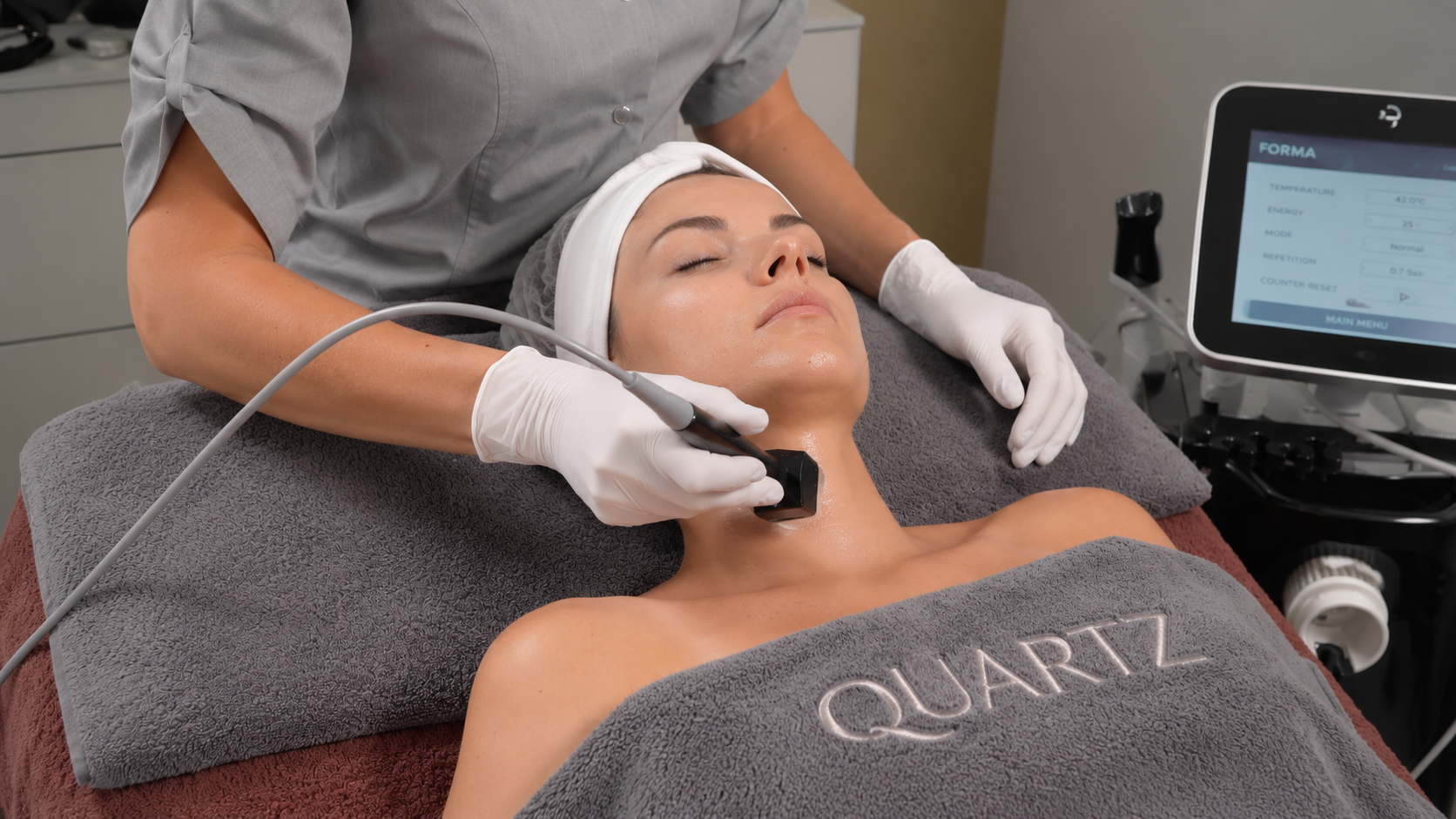
Forma Radiofrequency is a non-invasive skin treatment that uses controlled radiofrequency (RF) energy to heat the deeper layers of the skin and support collagen production. It is designed to improve skin firmness, texture, and overall appearance without needles or surgery. At Quartz Clinique in Istanbul, Forma RF treatment is individually planned according to the treatment area, skin quality, and aesthetic goals.
What Is Forma Radiofrequency?
Forma is a non-invasive radiofrequency treatment developed by InMode. It delivers controlled RF energy into the skin while continuously monitoring temperature to maintain consistent heating throughout the treatment area.
The controlled thermal effect is intended to stimulate collagen production and support existing collagen fibres. As a result, Forma is commonly used for patients who want to address mild skin laxity, loss of firmness, and changes in skin texture without an invasive procedure.
Unlike treatments that penetrate the skin with needles, Forma works from the skin surface and does not involve injections or incisions.
Forma Radiofrequency at a Glance
| Feature | Details |
| Treatment Type | Non-invasive radiofrequency skin treatment |
| Technology | Controlled bipolar radiofrequency (RF) energy |
| Main Purpose | Skin tightening, collagen support and improvement in skin texture |
| Common Treatment Areas | Face, jawline, neck and selected body areas |
| Needles | No |
| Anaesthesia | Generally not required |
| Downtime | Minimal in most patients |
| Treatment Plan | Determined individually according to skin quality and treatment goals |
How Does Forma RF Work?
Forma uses bipolar radiofrequency energy to create controlled heat within the deeper layers of the skin.
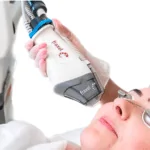
During treatment, the handpiece is moved continuously across the selected area. RF energy increases tissue temperature in a controlled manner while built-in temperature monitoring helps maintain the intended treatment range.
This controlled heating is designed to affect collagen fibres and stimulate the skin’s natural collagen-remodelling process.
Because collagen production and remodelling take time, the effect of Forma is not based solely on what the skin looks like immediately after the session. Improvements may develop progressively over the following weeks.
What Does Forma Radiofrequency Do?
Forma RF is primarily used to improve skin quality and support firmness rather than dramatically change facial features.
Depending on the patient’s skin condition and treatment plan, Forma may help:
- Improve the appearance of mild skin laxity
- Support collagen production
- Improve skin firmness
- Refine the appearance of skin texture
- Support facial contour definition
- Improve the overall appearance of the treated skin
Forma is generally better suited to mild or early changes in skin firmness than significant skin laxity.
Patients with more advanced tissue laxity may require a different energy-based treatment or, in some cases, a surgical approach.
Which Areas Can Be Treated with Forma RF?
Forma can be used on several areas of the face and body.
Common facial treatment areas include:
- Forehead
- Cheeks
- Lower face
- Jawline
- Chin area
- Neck
Depending on the treatment indication and device configuration, selected areas of the body may also be treated.
The appropriate treatment area should be determined according to skin thickness, degree of laxity, facial anatomy, and the patient’s individual goals.
Forma RF for the Face
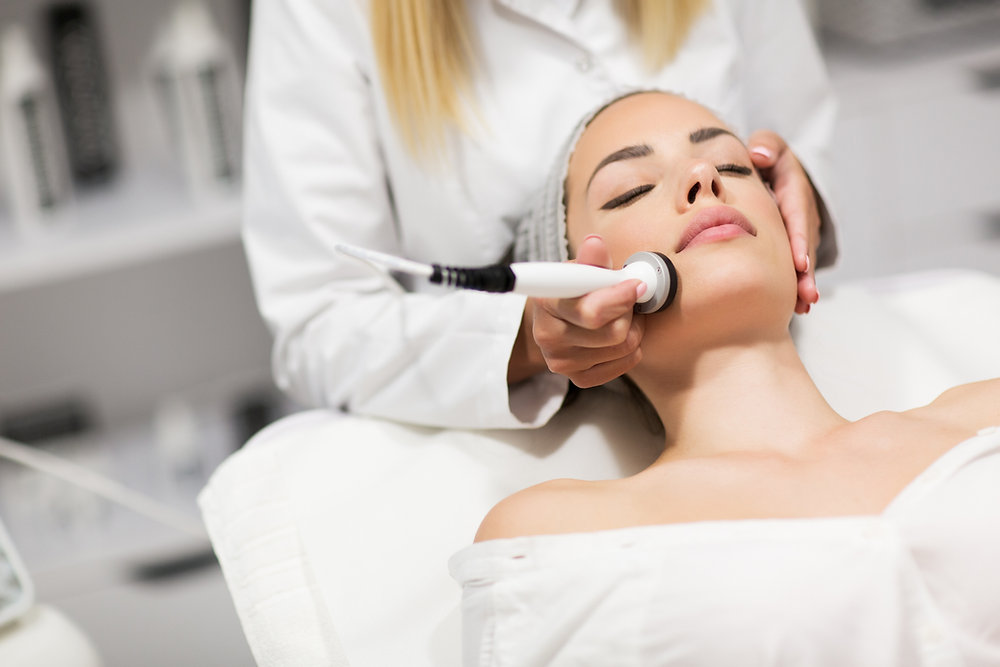
Forma is frequently used as a non-invasive facial radiofrequency treatment.
Rather than adding volume to the face, it targets the skin and underlying tissue with controlled thermal energy. This makes it an option for patients who want to improve skin firmness and quality without injectable fillers.
Treatment can be focused on areas where early skin laxity or reduced definition is noticeable, including the cheeks, lower face, and jawline.
Because Forma does not provide the same degree of tissue lifting as surgical procedures, realistic treatment expectations are important.
Forma RF for the Jawline and Neck
Changes in collagen and skin elasticity can gradually reduce definition around the lower face, jawline, and neck.
Forma RF can be used in these areas to deliver controlled radiofrequency energy and support collagen remodelling.
For patients with mild skin laxity, this may contribute to a firmer and more defined appearance over time.
However, Forma does not remove significant excess skin and should not be considered equivalent to a surgical neck or facelift procedure.
Who Is a Good Candidate for Forma Radiofrequency?
Forma may be considered for adults who want a non-invasive treatment for early or mild changes in skin firmness and texture.
Potential candidates may include people who:
- Have mild skin laxity
- Notice early loss of facial firmness
- Want to support collagen production
- Prefer a needle-free treatment
- Want minimal interruption to daily activities
- Are looking to improve skin quality rather than add facial volume
Suitability depends on the individual’s skin condition, medical history, expectations, and treatment goals.
A consultation is therefore necessary to determine whether Forma RF or another treatment would be more appropriate.
How Is Forma Radiofrequency Performed?
Before treatment, the skin and target areas are evaluated.
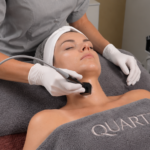
A conductive gel is applied to the skin, and the Forma handpiece is moved continuously over the treatment area. The device delivers radiofrequency energy while monitoring the temperature of the skin.
Patients typically experience a gradually increasing sensation of warmth during the procedure.
The treatment parameters and duration are adjusted according to the area being treated and the individual treatment plan.
Forma does not require needles or surgical incisions, and anaesthesia is generally not necessary.
Is Forma Radiofrequency Painful?
Forma is generally designed to be a comfortable radiofrequency treatment.
During the session, patients usually experience warmth as the handpiece moves across the skin. The sensation is often compared with a warm massage.
Individual sensitivity varies, and treatment parameters can be adjusted when necessary.
Because the treatment does not use microneedles or incisions, topical or local anaesthesia is generally not required.
How Many Forma RF Sessions Are Needed?
Forma is often performed as a series of treatments rather than a single session.
However, there is no universal number of sessions suitable for every patient.
The recommended treatment schedule depends on factors such as:
- Skin quality
- Degree of laxity
- Treatment area
- Age
- Individual response
- Aesthetic goals
Some patients may notice changes following the first treatments, while progressive collagen remodelling can continue throughout a treatment course.
The appropriate number and frequency of sessions should therefore be determined individually.
When Can Forma Results Be Seen?
The skin may appear temporarily smoother or firmer immediately after treatment due to the thermal effect and increased circulation.
However, the intended collagen-related changes develop progressively.
As collagen remodelling takes place, improvements in skin firmness and texture may become more noticeable over the following weeks.
The timing and degree of improvement vary between individuals according to skin quality, age, treatment area, and the number of sessions performed.
How Long Do Forma RF Results Last?
The duration of Forma results varies between patients.
Factors that may influence longevity include:
- Age
- Skin quality
- Lifestyle
- Natural ageing
- Number of sessions
- Individual collagen response
- Maintenance treatments
Because Forma works by supporting collagen remodelling rather than permanently altering the tissue, the natural ageing process continues after treatment.
Maintenance sessions may be considered according to individual needs.
Forma Radiofrequency Recovery and Aftercare
One of the advantages of Forma RF is its limited downtime.
Immediately after treatment, temporary redness or warmth may occur in the treated area. These effects generally settle relatively quickly.
Most patients can return to normal daily activities after the procedure.
After treatment, patients may be advised to:
- Keep the skin adequately moisturised
- Avoid unnecessary heat exposure immediately after treatment
- Use appropriate sun protection
- Avoid irritating skincare products if the skin is temporarily sensitive
- Follow individual aftercare instructions
Specific recommendations may vary according to the treatment area and skin condition.
Forma RF Side Effects and Risks
Forma is a non-invasive treatment, but temporary skin reactions may still occur.
Possible effects can include:
- Redness
- Warmth
- Mild sensitivity
- Temporary swelling
More significant adverse effects are less common when the treatment is performed with appropriate settings and patient selection.
As with other energy-based aesthetic procedures, the treatment should be planned according to skin characteristics, medical history, and the area being treated.
Forma RF vs Morpheus8 vs Thermage FLX vs Ulthera Prime
Forma, Morpheus8, Thermage FLX, and Ulthera Prime can all be used in aesthetic treatment plans related to skin quality or tissue laxity, but they are not interchangeable treatments.
They use different technologies, reach different tissue depths, and are selected for different indications.
| Treatment | Technology | Main Approach | Needles |
| Forma RF | Bipolar radiofrequency | Controlled heating for skin firmness and collagen support | No |
| Morpheus8 | RF microneedling | Fractional RF delivered through microneedles for skin remodelling | Yes |
| Thermage FLX | Monopolar radiofrequency | Deeper volumetric heating for collagen remodelling and skin tightening | No |
| Ulthera Prime | Microfocused ultrasound | Focused ultrasound energy delivered at selected tissue depths | No |
The most appropriate technology depends on the degree of skin laxity, skin quality, treatment area, desired depth, tolerance for downtime, and individual expectations.
For this reason, the choice between Forma, Morpheus8, Thermage FLX, and Ulthera Prime should be based on an individual assessment rather than simply selecting one technology as universally “better.”
Forma RF or Morpheus8?
Forma and Morpheus8 both use radiofrequency energy, but their delivery methods are different.
Forma delivers RF energy non-invasively through a handpiece that moves across the skin surface. There are no needles.
Morpheus8 combines microneedling with radiofrequency energy. The microneedles penetrate the skin and deliver RF energy at selected depths.
Forma may therefore be preferred when the goal is a comfortable, non-invasive treatment with minimal downtime, while Morpheus8 may be considered when fractional skin remodelling at greater depths is required.
The appropriate option depends on the patient’s skin and treatment goals.
Forma Radiofrequency Treatment in Istanbul
For international patients considering Forma Radiofrequency in Istanbul, the treatment has the practical advantage of being non-invasive and generally requiring little downtime.
At Quartz Clinique, Forma treatment is individually planned according to skin quality, facial anatomy, degree of laxity, and aesthetic goals.
An assessment can help determine:
- Whether Forma is suitable for the patient’s concerns
- Which areas should be treated
- How many sessions may be appropriate
- Whether another technology would better address the concern
- Whether Forma should be incorporated into a broader treatment plan
Because Forma is generally performed as a treatment course, patients travelling to Istanbul should also consider whether multiple sessions are appropriate for their schedule.
International patients who are only in Istanbul for a limited period should discuss this during treatment planning.
Forma RF Cost in Istanbul
The cost of Forma Radiofrequency treatment in Istanbul can vary according to the individual treatment plan.
Factors that may affect treatment cost include:
- Area being treated
- Number of treatment areas
- Number of sessions
- Individual treatment protocol
- Whether Forma is performed alone or as part of a broader treatment plan
For this reason, a personalised assessment is necessary to determine the appropriate treatment schedule.
Frequently Asked Questions About Forma Radiofrequency
Is Forma RF a skin tightening treatment?
Forma uses controlled radiofrequency energy to heat the tissue and support collagen remodelling. It is commonly used to improve the appearance of mild skin laxity and firmness. It does not, however, provide the same degree of lifting as surgery.
Does Forma RF use needles?
No. Forma is a non-invasive radiofrequency treatment and does not use microneedles or injections.
Is Forma the same as Morpheus8?
No. Both technologies use radiofrequency, but Forma delivers RF energy through the skin surface without needles. Morpheus8 combines microneedling with radiofrequency energy delivered at selected depths.
Can Forma RF be used on the neck?
Yes, Forma may be used on the neck in suitable patients to support skin firmness and collagen remodelling. The treatment area and settings should be determined individually.
Can Forma be used on the jawline?
Forma can be applied to the lower face and jawline when mild skin laxity or reduced definition is a concern. It does not remove significant excess skin or fat.
Does Forma RF melt facial fat?
Forma is primarily designed for controlled tissue heating and collagen support. It should not be considered a substitute for treatments specifically intended for significant fat reduction.
Can Forma be combined with other treatments?
Depending on the patient’s needs, Forma may be incorporated into a broader aesthetic treatment plan. The appropriate combination and timing depend on the technologies or injectable treatments involved and should be planned individually.
Is there downtime after Forma?
Downtime is generally minimal. Temporary redness, warmth, or mild sensitivity may occur after treatment, but many patients return to their usual daily activities shortly afterwards.
How many Forma sessions will I need?
There is no fixed number suitable for everyone. Forma is commonly performed as a treatment series, with the number and frequency of sessions determined according to skin quality, treatment area, degree of laxity, and individual response.
Is Forma suitable for international patients visiting Istanbul?
Forma may be practical for international patients because it is non-invasive and generally involves limited downtime. However, because a series of sessions may be recommended, the treatment schedule should be considered in relation to the length of the patient’s stay in Istanbul.
References
- InMode. Forma – Non-Invasive Radiofrequency Technology. Manufacturer information and treatment technology documentation.
- U.S. Food and Drug Administration (FDA). Medical device information and regulatory documentation relating to radiofrequency aesthetic technologies.
- Elsaie ML. Cutaneous Remodeling and Photorejuvenation Using Radiofrequency Devices. Indian Journal of Dermatology.
Content Responsibility and Medical Review

Medical expert
Specialist in Plastic, Reconstructive and Aesthetic Surgery
Leyla Arvas graduated from Istanbul University, Istanbul Faculty of Medicine in 1998 and is a specialist in Plastic, Reconstructive and Aesthetic Surgery.
Dr. Leyla Arvas sees patients at her private practice and performs her surgeries at Acıbadem Hospital and Memorial Hospital, both of which are accredited by the Joint Commission International (JCI).
Medical content lead for Forma Radiofrequency Treatment: MD, Leyla Arvas, MD
Last updated: